Posted by Managementguru in Glossary, Strategy
on Mar 5th, 2015 | 0 comments
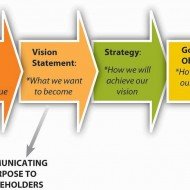
The following is a list of “Key Terms of #Strategic Management” which find their use often when trying to explain the concepts. #Mission An important undertaking that an organization believes it is its duty to do. A specific task or duty assigned to a person or group of people. Missions tend to be long-term and laid out in broad terms, without attempts being made to quantify them precisely. #MISSION STATEMENT Mission statement An open statement of the aims and #objectives of a business or an organization – providing employees with an indication of what they are attempting to achieve through their collective deeds. Mission statements are intended to give substance to the perceived purposes of the organization. Vision Statement A Vision Statement defines what your business will do and why it will exist tomorrow and it has defined #goals to be accomplished by a set date. A Vision Statement takes into account the current status of the organization, and serves to point the direction of where the organization wishes to go. Objective Something which an organization intends to do or achieve; a result that the organization intends to make happen. Long-term or short-term objective, which you hope to achieve within a few years or a few months. Objectives and aims tend to be medium-term and more specific in terms of what is intended to be achieved. SMART OBJECTIVES #Strategy A #plan of future action, usually long-term, in the pursuit of objectives. (e.g.) business strategy; company strategy; financial strategy. The formulation of long-term plans and policies by a firm which inter-connects its various production and marketing activities in order to achieve its business objectives. STRATEGY GENERATION #Aim A result that an organization’s plans or actions are intended to achieve. (e.g.) To try to do something: we aim to be No. 1 in the market in three years’ time. Goal An organization’s aim, objective or purpose. Goals and targets tend to be medium-term or short-term and may be expressed in terms of specific levels of achievements and tend to involve more specific quantification and deadlines. (e.g.) our goal is to break even within twelve months. GOALS VS. OBJECTIVES #Target A level or situation which an organization intends to achieve or aim at. An object or area aimed at the object of an attack or takeover bid. A fixed goal or objective, etc. #Tactics The plans followed to achieve a particular short-term aim. (a) The science and art of disposing and maneuvering forces in combat. (b) The art or skill of employing available means to accomplish an end. (c) A system or mode of procedure TACTICS OR STRATEGY? Plan A set of decisions about how an organization intends to do something, or to ensure that an event or result should happen in the future. Organized way of doing something: contingency plan, government’s economic plans. Plans tend to be quite specific (the shorter-term they are, the more specific they tend to be) and are usually quantified in some detail. They will, in order to ensure that they are complied with, lay out specific deadlines for each key stage. They may also involve the consideration or analysis of priorities and constraints. STRATEGIC PLANNING #Budget A #financial plan, which may be short-term or longer-term, showing probable (planned) #income and #expenditure. Budgets tend to be expressed mainly in monetary terms, although they may focus on the amounts of physical resources (materials, labor time) required. An estimate of income and expenditure for a future period, as opposed to an account, which records financial transactions after the event. BUDGET...

Posted by Managementguru in Business Management, Decision Making, Financial Management, Marketing, Sales, Startups, Strategy
on Mar 4th, 2015 | 0 comments

A popular “Corporate Portfolio Analysis” technique is the result of pioneering effort of General Electric Company along with McKinsey Consultants which is known as the GE NINE CELL MATRIX. GE Nine-Box Matrix This is a strategy tool that offers a systematic approach for the multi business enterprises. It helps them to prioritize their investments among the various business units. It is a framework that evaluates business portfolio and provides further strategic implications. Each business is appraised in terms of two major dimensions – Market Attractiveness and Business Strength. If one of these factors is missing, then the business will not produce desired results. Neither a strong company operating in an unattractive market, nor a weak company operating in an attractive market will do very well. The vertical axis denotes industry attractiveness, which is a weighted composite rating based on eight different factors. They are: Market size and growth rateIndustry profit margins Intensity of Competition Seasonality Product Life Cycle Changes Economies of scale Technology Social, Environmental, Legal and Human Impacts What Does the Horizontal Axis Represent? It indicates business strength or in other words competitive position, which is again a weighted composite rating based on seven factors as listed below: Relative Market ShareProfit margins Ability to compete on price and qualityKnowledge of customer and market Competitive strength and weakness Technological capability Caliber of management The two composite values for industry attractiveness and competitive position are plotted for each strategic business unit (SBU) in a COMPANY’S PORTFOLIO. The PIE chart (circles) denotes the proportional size of the industry and the dark segments denote the company’s respective market share. The green zone suggests you to ‘go ahead’, to grow and build, pushing you through expansion strategies. Businesses in the green zone attract major investment. Red indicates that you have to adopt turnover strategies of divestment and liquidation or rebuilding approach. Advantages Helps to prioritize the limited resources in order to achieve the best returns.The performance of products or business units becomes evident. It’s more sophisticated business portfolio framework than the BCG matrix. Determines the strategic steps the company needs to adopt to improve the performance of its business portfolio. Disadvantages Needs a consultant or an expert to determine industry’s attractiveness and business unit strength as accurately as possible.It is expensive to conduct. It doesn’t take into account the harmony that could exist between two or more business units. PORTER’S FIVE FORCES-INDUSTRY...
Posted by Managementguru in Business Management, Marketing, Operations Management, Project Management, Sales
on Feb 3rd, 2015 | 0 comments
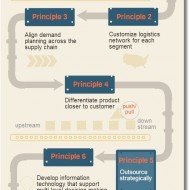
What is Supply Chain Management? Investopedia Supply chain management (SCM) is the streamlining of a business’ supply-side activities to maximize customer value and to gain a competitive advantage in the marketplace. SCM represents an effort by suppliers to develop and implement supply chains that are as efficient and economical as possible. Wikipedia Supply chain management (SCM) is “the systemic, strategic coordination of the traditional business functions and the tactics across these business functions within a particular company and across businesses within the supply chain, for the purposes of improving the long-term performance of the individual companies and the supply chain as a whole.” Business Dictionary 7 Principles of SCM Management of material and information flow in a supply chain to provide the highest degree of customer satisfaction at the lowest possible cost. SCM requires the commitment of supply chain partners to work closely to coordinate order generation, order taking, and order fulfillment. They thereby create an extended enterprise spreading far beyond the producer’s location. Supply Chain Management in Simpler Terms The EFFECTIVE movement and management of materials and information as they flow from their source to the end customer. Supply Chain encompasses purchasing, manufacturing, warehousing, transportation, customer service, demand planning and supply planning. SCM is a daunting task and calls for proper planning and execution. SCM is the control of the supply chain as a process from supplier to manufacturer to wholesaler to retailer to consumer. SCM does not only comprise the passage of a physical product through the chain but also any data that goes along with the product (such as order status information, payment schedules, and ownership titles) and the actual entities that handle the product from stage to stage of the supply chain. OBJECTIVES OF FORECASTING There are Essentially Three Goals of SCM To reduce inventory To increase the speed of transactions with real-time data exchange and To increase revenue by satisfying customer demands more efficiently. When you think of the world’s most efficient and successful performance and supply chains, what comes to mind? For me it is not Wal-mart or Pepsi but Mumbai Dabbawalas – Watch this Video. The Success of Supply Chain of Dabbawalas in Mumbai –Said to be Six Sigma Compliant No over-reliance on technology, all manual operations Create an integrated performance chain, the chief, team leaders and delivery men. Acute visibility Keep it simple. Real simple with a color coding to identify where the food has to be delivered and to whom. Timely Delivery as the shelf life of food is 4-5 hours. Why is it so important for companies to get products to their customers quickly? Faster product availability is significant to increasing sales and there’s a sizeable profit advantage for the extra time that you are in the market and your competitor is not. The earlier and faster you are in the market, the more orders and market share you enjoy. The ability to deliver a product faster also can make or break a sale. If two competitive products appear to be equal and one is immediately available and the other will be available in a week, which would you choose? Supply Chain Management is all about moving goods more quickly to their destination in a strategic and tactical manner. Supply Chain Management Tomorrow The future for Supply Chain Management looks very bright. Two major trends are benefiting Supply Chain Management operations- Customer service focus and Information technology. Successful organisations must excel in both of these areas, the fundamental objective being to “ADD...
Posted by Managementguru in Accounting, Financial Accounting, Financial Management, Management Accounting, Project Management, Training & Development
on Jan 21st, 2015 | 0 comments

What Does a Career in Accounting Demands for? Are you vying for a career in accounting field? Everybody envy accountants for there is a misconception that they are Demi-Gods. Though a good accounts manager can act like one who can save you from a dire situation by manipulating the accounts skilfully, the demands and challenges in this field are too high to be savored. Purchase Your Copy of “Careers with a Degree in Accountancy and Finance” at Gumroad So what does it take to become a reputed accounts man in your circle and also enjoy what you do! Self analysis is the best way to understand what you really want to be. There are certain traits characteristic to people belonging to this community. See if you are gifted with those attributes; if not, you can always train yourself to gain expertise. 1. Are you good at numbers– Mathematics, Yuck! If this is your reaction please quit reading this article as numbers play an integral role in accountancy. Figures, Figures and more Figures determine the profit and loss status of a company. If you are passionate about playing with numbers it goes without saying you are already a half accountant. The thrill of taking control and handling numbers make or break a company. Jackie Mansion jocularly puts it – “Did you ever hear of a kid playing accountant – even if they wanted to be one?” 2. Are you a good listener and can you read between the lines? A good auditor will allow the client to talk and listen to what he says. Then he tries to extract the exact kind of information he needs to make the ends meet. Empathy is an innate quality and if you are not going to be a good listener then please revise your consideration of becoming an accountant. Sometimes the client may not know what you wish to seek; it is your responsibility to frame simple questions in a language that he understands and pull out answers. 3. Can you avoid being temperamental? 90% of the time your clients are going to say “No” to whatever you suggest. Alas, it is not their fault; the corporate Bosses and CEO’s always aim big and most probably will not be aware of the consequences of their impulsive actions. They always think about clinching a deal and conveniently overlook the effects of their financial and corporate decisions on the account and subsequently on the accountant. For example cash has to be handled very carefully and every penny has to be accounted for properly. A bank cashier will know the importance of cash handling as it is very important for them to balance the inflow and outflow at the end of the day. For corporate firms, it becomes mandatory to reduce the cash dealings and account every transaction in the form of a check or electronic transfers like RTGS or NEFT or EFT. The point is, you should have the nerve to talk to a company’s head if he is planning for a bad move and suggest what could be done for the good of the company (Income tax and Sales purposes). 4. Are you wise when it comes to choosing clients? Whether you are a part time practitioner, Full time accountant, Accounts manager or Free lancer, do your homework before accepting the offer. Ultimately you need to see your payments coming through and nobody works here for a song. Big practitioners take a big cut half yearly or annually but if you are a part time accountant, it is always better to go for monthly payments or get paid after the completion of individual project s....
Posted by Managementguru in Human Resource, Training & Development, Video Lecturers
on Jan 13th, 2015 | 0 comments

Talent Acquisition and Compensation Benefits A lecture on Talent Acquisition and Compensation by Dr. Armin Trost Human Resource Management Lecture – Talent Acquisition What does the traditional approach in recruiting look like? How is a company able to position and present itself as an attractive place to work through building an employer brand? Which active search strategies help companies to find and approach passive candidates? How can companies retain promising and talented candidates? You Don’t Create Your Employment Brand, Your Candidates And Employees Do” – @ChiHeadhunter Talent hits a target no one else can hit; genius hits a target no one else can see. – Arthur Schopenhauer The following video lecture by Dr. Armin Trost clearly indicates his knowledge and experience on the subject. Visit this link to know more about this HR Expert- Armin Trost Human Resource Management Lecture – Candidate Selection During a company’s recruiting process how are the most suitable candidates selected and which risks need to be controlled? How can a company determine a candidate’s future performance? Which selection criteria are typically used? What are the most commonly used selection methods? Whenever you are asked if you can do a job, tell ‘em: ‘Certainly I can!’ Then get busy and find out how to do it. – Theodore Roosevelt Find out what you like doing best and get someone to pay you for doing it. – Katherine Whitehorn Human Resource Management Lecture – Compensation and Benefits What is equity? Which components make up total reward and based on which factors are these components determined? How does fixed and variable pay work in practice? What are benefits and why are they there? Under which conditions does money impact motivation for performance? Strive not to be a success, but rather to be of value. – Albert Einstein The mind is everything. What you think you become. – Buddha Related Videos: HRM Video 1 HRM Video...