Posted by Managementguru in Business Management, Human Resource, Organisational behaviour, Principles of Management, Training & Development
on Mar 18th, 2014 | 0 comments
Self Appraisal-Amuse Yourself What is Self Appraisal: Self evaluation process involved in determining the level of self efficacy . By and large, corporate companies go for a one tier system of appraisal-where the supervisor generates a confidential report about his subordinates as and when required. This serves as a basis for the management to decide on increments or promotion for the respective candidate. But the question is, is this system fool proof? Definitely not. There are certain lapses that deserve mention and the management has to design suitable appraisal formats to improve or strengthen the weak areas. Purple Minimalist We Are Hiring Project Manager Poster by managementguru.net Some areas where the appraisal process can take a deviation: A biased report given by the appraiser due to various reasonsPerception of appraiser may be wrongThe appraiser sees the appraisee through his ideas and not from the management’s view point, which may lead to clash of ideas where the appraisee is made the victimFlaws in the design of the appraisal process where the top management may not come to know the real need of the appraiseeAppraisees sometimes don’t identify themselves with the organization and its objectivesAppraisees may not know what kind of behavior traits is expected of them by the management So it is imperative on the part of the management to introduce self appraisal process in its agenda, where the appraisee himself becomes the appraiser. This helps the organization to accomplish its overall objectives in a short time through a high performance system. This kind of appraisal by ‘oneself’ makes each and every employee to clearly understand where he stands against the expected scale of behavior. 7 ways to be professional at work Two-tier system as we may call it will help in the following manner: Participative approach infuses a sense of belongingness amongst the workforcePotential of the appraisee can be brought outThe real problem of the employees is knownHigher level of approach or interest to know or evaluate one’s own behavior is seen. Basically, organizations must examine their assumptions about human behavior and come to a common belief about people. If they believe people are basically “bad” management might go for hiring “watch-out-look-out” supervisors, rigid disciplinary regulations, and separate facilities such as parking, dining and rest rooms. All these clearly spell out the existence of distinction between the management and workforce. If the organization comes to a common agreement that people are basically “good”, entirely the approach will be different. Every worker becomes a manager and uniform treatment is given to both the employees and managers of higher cadre. Essentially in my opinion, no organization or work society will succeed without visionaries and uniform treatment that is consistent with basic principles and ethics. It has to be understood that work attitudes and values are ultimately a company’s best competitive advantage. Note: Larsen & Toubro – Engineering major Larsen & Toubro has developed a competency matrix which lists 73 competencies-that vary across managerial levels-to measure performance and gauge developmental needs of its employees. National Panasonic – The Japanese white-goods major has developed a performance-assessment system driven by Key Result Areas (KRAs). KRAs describe performance goals-business, functional, and behavioural ones-with defined time-frames and are decided jointly by the employee and his manager at the beginning of the...

Posted by Managementguru in Business Management, Human Resource, Organisational behaviour, Principles of Management
on Mar 17th, 2014 | 0 comments
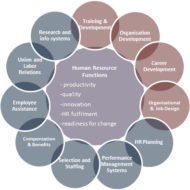
Personnel or Human Resource Management: is the strategic approach to the management of an organization’s most valued assets – the people. Human resource is always in great demand as competent or skilled labor is in short supply. It is important to remember that no one is born with the value of excellence, as the acquisition is gradual in nature and only possible through proper training and one’s own cognitive perception. It is not that people have to belong to the elite group to make their mark in the respective fields. The best leaders and managers often are ordinary people creating amazing results and astounding success. Try some of these golden etiquettes for achieving excellence in the management of human resource: Clear objectives have to be set with the consensus of the employees Recognize the progress Confront problems Manage with flexibility Understand the value of quality Manage time for better results Enhance decision-making skills by delegating authority Master stress Motivate people Think like a winner Pursue a participative style of leadership To achieve the goals of the organization, the HR department will have to reorient itself on the following lines. It is very important that ‘Right people are chosen for the Right job’. During the induction stage, employee attitudes must be shaped in harmony with the culture of the organization. Dynamic training system should be introduced which is supposed to be a continuous process rather than a sporadic exercise. Quality of Work Life: Organization should ensure satisfactory quality of work life in order to minimize the sense of alienation, found in the workplace. It should contribute to an atmosphere to improve self-discipline, self-motivation and self realization for the purpose of production optimization in terms of both quantity and quality. The presence of a fair performance appraisal system will facilitate the growth prospects of employees in terms of career advancement and development. Fair Compensation: Institutions must work out a fair compensation package for all categories of workmen so that they may be able to receive the living wages instead of subsistence-level wages. The accent should be on production and productivity, without any compromise. Opportunities are aplenty, particularly for experienced personnel as the industries offer wide job prospects for the prospective candidates. Now-a-days job hopping is rampant which is a serious issue to be managed. A number of organizations offer bonus in the form of stock that interjects a feeling of oneness, which ensures alignment of interest between employees and the management. Favored position in terms of enhanced performance from the work force is possible only if the management comes down to embrace and lend their ears to certain rational demands form the other end. Security of Employment Increased wages Employee ownership Participation and employment Internal promotions Information sharing Incentives etc., The personnel function can 1) Attract attention to indicate the importance attached to management’s process and the various policies, practices and systems that support the process. 2) Provide necessary information and expertise on best practices in rival companies to benchmark the process and provide with analytical support for diagnosing and recounting solutions to problems arising in the employee management relation. 3) Engage in business decisions and accelerate change that is consistent with the underlying values of the company. Note: The laws and matters relating to wages and bonus come under the purview of the Ministry of Labor and Employment. The Minimum Wages Bill was passed by the Indian Dominion Legislature and came into force on 15th March,...
Posted by Managementguru in Business Management, Principles of Management, Project Management, Strategy
on Mar 16th, 2014 | 0 comments
Strategy Implementation Organizational objectives must be accomplished by strategic planning and thinking that makes your organization unique and also helps to have a competitive edge. What are the elements that are part of this planning strategy? Proper allocation of resources An appropriate organization structure Efficient human resource personnel An effective management information system A feasible budgeting system A good reward system Periodic strategy review system There are many more aspects that can be attributed to broadly define strategic planning and execution. The success or failure of this exercise is in the hands of managers, who should be adequately prepared for the planning process. The objectives of the organization must be well defined and clear so that the people in the organization can evolve the necessary plans to accomplish those objectives. The action plans are then formulated based on these initially formed plans. So, the planning premises form the base on which the organization is built. Strategic business units must be identified and nurtured to add value to the organization. Why strategic planning becomes a failure in some of the organizations? Lack of proper training in strategic planning, and the key persons are the managers at all levels. Vague goals and objectives don’t make them meaningful and strategic excellence cannot be achieved. Long term goals not subjected to periodic review. If there is fluctuation in the political, economic or social environment, that is detrimental to the industry in which the firm operates, the goals can be reviewed and a revised strategic plan can be devised for the long term health of that organization. Poor budget planning. To enjoy a sustainable competitive advantage in the market, you need to have a good financial backup to give shape to your plans. The strategic plans must be supported by specific action plans. It is a pity that in many organizations, there is neither co-ordination nor co-operation between the peers to make the strategic plans successful. Integrating these various functional groups becomes a tough task for the management. Simple but effective measures: Above all odds, a company can make things work, if the management is wise enough to follow these First and foremost thing to be done is to communicate the strategic plans to all the managers who are key decision makers. The management must make sure that everybody involved in the strategic implementation understand those strategies. Well devised action plans that contribute to the accomplishment of the firm’s objectives must be laid down. A well defined span of management that makes communication flow easy and simple. Revising the strategies in lieu of the contingencies. A conducive organizational climate that is devoid of conflicts and pressure Involvement of top management to ensure success. Thinking Out of the Box: You need “thinking managers“, to make your organization grow. The modern business management lays great emphasis on “getting people together” to accomplish the goals and objectives. How do you get people to work together? They should have a common business ideology that binds them to work for the upliftment of the organization. Although top level management cadre is responsible for formulating strategic plans, organizations must understand that the idea also reaches the lower level management in the right sense. That facilitates smooth execution delivering the expected result. Benefit from this Free Udemy Course on Marketing Strategies https://www.udemy.com/one-minute-marketing-lessons-30-quick-marketing-strategies/...
Posted by Managementguru in Business Management, Marketing, Principles of Management, Strategy
on Mar 16th, 2014 | 0 comments
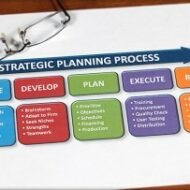
Strategies to Tide Over Competition Distinctive Competence: is nothing but a set of unique capabilities that certain firms possess allowing them to make inroads into preferred markets and to gain advantage over the competition. Human brain is the greatest think tank and it evolves new methodologies of business management from time to time in order to sustain as well as win the race. Planning is the key factor that decides the rise or downfall of a business empire. “Where we are?” and “Where we want to be in the next few years?” is how every business leader’s basic thought process must be, without which he cannot proceed further in the competitive corporate environment. If we call planning as the basement of a building, then it should be very precise, clear cut and robust so that the business empire built on this basement will never collapse and it will also serve as a role-model for everyone who aspires to set his foot in the corporate business world. At the corporate level, strategic planning helps to establish the Purpose Mission and Objective for the firm as a whole and “outlines the overall plan to attain them.” Strategy is nothing but a unique set of action plan that will distinguish you from your competitors and make you have an edge over them. Likewise strategic planning is nothing but thinking out of the box to” CREATE YOUR OWN NICHE MARKET” in the business environment. STRATEGIC COMPETENCE takes you to the top of the ladder; but to withhold your position you need to formulate innovative ideas to tide over the challenges in the market. Strategic planning facilitates this process by giving you time frame to complete your short term objectives and long term goals. Infographic Courtesy: The 4 key sources to seek insights for marketing planning Planning for SBU’s: Business level planning is done for the enterprise’s STRATEGIC BUSINESS UNITS or SBU’S. These are individual” cash cows” that makes your business noteworthy and also brings in constant revenue to run your other units successfully even in periods of recession or if a particular product is not that successful as you might have expected it to be. I shall compare a business plan to a travel plan. Both involve planning, resources, capital, marketing and so on. . . Both have starting points but a business plan and its objectives never end and you can never come back to the starting point in a business as that of a travel, because you only expand and grow to greater heights in a business provided your plan is pucca. And also the strategy seeks the integration and control of marketing, finance, production and human resources at the functional level. Strategic Plans at different functional levels: Strategic plans at different levels must be integrated to ensure that they work in tandem and reinforce each other, thereby contributing to the corporate level strategy adopted for the entire corporate group. I would call strategic planning as” INTELLIGENCE DESIGN CHOICE ACTIVITY “adopted by a corporate and it has become an inevitable feature in the directory of the business world....
Posted by Managementguru in Business Management, Entrepreneurship, Human Resource, Leadership, Principles of Management
on Mar 13th, 2014 | 0 comments
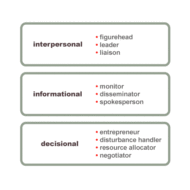
Research on Managerial Roles by Henry Mintzberg and Peter Drucker Henry Mintzberg, the canadian academic observed a few managers and analysed their behaviors and arrived at some conclusions which are listed in the table below. He also identified and attributed ten managerial roles of significance in correlation with the managerial functions. S.NoManagement Functions% of time spent1.Relating to external environment1.82.Planning and setting Objectives19.53.Decision-making6.04.Organising15.05.Leadership and inter-personal role28.46.Communication12.67.Control12.78.Staffing4.1 This table very clearly explains the role of a manager as a leader and the extent of influence he exerts on his sub-ordinates. Proper planning and goal-setting are the key contributors for the successful functioning of a firm. LEADER VS. MANAGER Coming to the managerial roles they can be classified as, 1. Interpersonal roles 2. Informational roles 3. Decisional roles Inter-Personal Roles: Figurehead role– The function is more of a ceremonial nature, like attending the family functions of employees, greeting visitors and a manager performs the symbolic duties of a head of the organization.Leader– He has to plan the HR requirements and motivates the staff to perform well. “Managers are people who do things right; leaders are people who do the right thing.” Remember a manager has to be a leader whereas it is not so in the case of a leader.Liaison– The manager acts as a link between the organization and the external environment to build image and rapport. Informational Roles: Monitor– The manager has to update himself with the current scenario in order to utilize the information for organizing and prompt decision-making.Disseminator– The manager has to communicate and distribute information to his subordinates to effectively accomplish the enterprise objectives.Spokesperson– Efficiently has to communicate the company’s policies to prospective clients and others. Decisional Roles: Entrepreneur– He has to be innovative by adapting to the changes in the environment. He has to be adventurous, persistent and strategic during tough times.Disturbance handler– He has to find appropriate solutions to problemsResource allocator– He has to apportion and allocate resources properly besides delegating authority to the work forceNegotiator– He has to negotiate resources outside and conflicts inside the organization. MANAGERIAL DIMENSIONS Managing: Science or Art? One perspective is Managing, like all other disciplines- whether medicine, music composing or even cricket is an art. It is “know-how.” Still managers can use the organized knowledge about management to perform better. So let us put it this way, Managing as practice is an art; the organized knowledge underlying the practice may be referred to as a science. Let them be complementary to each other and be present in peaceful co-existence. Drucker “ON MANAGERIAL FUNCTIONS ” – A manager has to look after The specific purpose and mission of a firmIncrease productivity by making the employees more productiveConsiderate about social impacts and social responsibilities In his view, the areas a manager has to focus and concentrate are 1. Market standing 2. Innovation 3. Productivity 4. Financial and Physical resources 5. Profitability 6. Manager performance and development 7. Worker performance and attitude 8. Public responsibility He says that business has only two functions- marketing and innovation. While others were concentrating on products and commodities, he concentrated on people and their performance. His “management by objectives- MBO ” became a very popular concept though it faced criticism. MBO according to Drucker is a philosophy that rests on a concept of human action, behaviour and motivation. It sets personal goals (both shortterm and longterm) to be achieved by each individual working for the organization and coverts them into challenges to be accomplished, thus motivating the individuals. The Effective Manager The effective manager is a situational manager who evaluates each approach in the light of circumstances and selects the one that most effectively and efficiently achieve individual...