Posted by Managementguru in Business Management, Motivation, Organisational behaviour, Principles of Management
on Mar 10th, 2014 | 0 comments
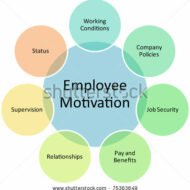
Motivation is one area where periodical updates are necessary for an organisation to gauge the morale and mood of their employees. Companies sometimes act very smart in that they break their hands by patting their own back. If you wish to propel your organisation forward, you need to satisfy your work force first. The million dollar question is a big “HOW?” Well, a problem properly diagnosed is half done. And this motivation thingy is not a problem at all. Keen observation and understanding is what is needed on a manager’s part to steer things in the right direction, that is good for the company. Man, even your kid will turn his back if you want to take control by unleashing your power. The right thing to do is to find out exactly how motivated they are. There are several things that come into the purview of motivation.Let us do this in a questionnaire format so that things might fall in place. Question No 1: What is that, that motivates an employee, to be more precise your employee? (This turns out to be the hot dissertation topic for many young MBA’s) Is it any one of the following? Financial rewards Clear Goals Connecting with others Rank Appreciation and Recognition Throat neck competition Job security Fear Results Excitement Variation or Diversity Principle of Motivation: Well, the principle of motivation is pretty much the same for all individuals. I 100 % go with Maslow’s hierarchial needs theory which travels right from physical needs at the base of the pyramid upto self realisation at the top. If this is the case,how come there is a disparity when everybody is subjected to the same kind of influence at the work place? For some it stops somewhere in the middle who are very much satisfied with the pay check figure and the perks that go with it. For some there is an inner drive that makes them unstoppable until they reach the pinnacle. This is the very thing that differentiates a manager from a subordinate. This is the very thing that distinguishes a CEO from a manager. This is the same thing that generates top business guns and management gurus who fall a genre apart form the rest of the crowd. Well, there are other factors such as the family background and the environmental influence that shaped up your personality all through. Motivation Surveys: Motivation surveys are not only important in getting to know your employees but also it showers a immaculate image on the company. It feels good for your workforce when they are involved and consulted with, on issues related to themselves. A recent Harvard review has stated that most of the managers feel that they really get motivated when there is : “Recognition for Good Work.” But folks, you will be surprised to know that the same review reveals another side of the coin, the top motivation for workers is when they make “Progress.” Again, call it the inner drive, impulse, motive, ambition, fire in belly, vigor, vitality…Getting to know your work force makes you “BOND WITH THEM” and it aids you in plugging the holes at the right place and at the right time. See, there is no bench mark for motivation, you respect your work force, treat them with dignity, communicate well and give them what they want and that’s it, you are defintely a winner. If you are a person capable of motivating your work force, you automatically become a source of inspiration. My humble suggestions to managers goes thus: 1. Make your employees understand what motivates them.( Kindly find what flares your temper before venturing into this exercise.!) 2....

Posted by Managementguru in Business Management, Motivation, Organisational behaviour, Principles of Management
on Mar 9th, 2014 | 0 comments

How well employees know about your Organization? Now, this is a million dollar question and a prominent issue that has to be taken care of when it comes to motivating your employees. Transparency is a booster pack that works out wonders in the area of motivation. 25 Great Motivational Quotes to Kickstart Your Life How can a management be transparent in key areas like finance and business deals, my question is WHY NOT? The success of operations of a firm relies solely upon the performance of individuals who work towards the accomplishment of goals. They are the key persons who should be kept abreast about the activities of the firm. What makes some organizations stand out? When the Boss wants each and every employee to be truthful and loyal to him, the same expectancy would be there on the part of the workforce –Why don’t the bosses understand this? Integrated Organizational Development I would cite TVS Group as a classic example that commands respect from the employees and many a times I’ve heard people say that they are proud to work for TVS. What makes the employees so motivated to work for certain firms overlooking the pay scale and perks? One should deeply delve into the psychological theories that support motivation, perception and attitude. Etiquette of the company: This is one thing that a firm has to clearly communicate to its work force. The ideology and principle behind the running of the business should be genuine and authentic. The pathway to achieve those missions should be realistic and achievable-to put it clearly a firm should have its business roots stemming out from clear cut intent and purpose. When JRD Tata wanted to start a steel plant in India, not many believed it to be a possible venture. The business legend had clear cut intent of installing a steel plant to utilize the resources available in India and to pass on the proceeds for the economic benefit of the country. Nobody suspected his intent; such was his determination and resolve. This infographic beautifully portraits the scenario of how the future employees would be: Communication of Goals: The management will have clear plans of production target which has to be communicated properly to the lowest level with the same amount of clarity. This has to be done via channels or different levels of management and executives have to play their roles properly. Nobody needs to show their prowess or power; only thing needed is proper delegation of authority and responsibility. This gives clear direction to the work force and when their immediate boss sits with them for periodic discussions to decide on the short term as well as long term objectives, they feel part of the show which immensely motivates them. Ethical Standards of the company: This again adds image to the company and “As is the Leader so is the Employee.” The management should not involve itself in any kind of lobbying – When there is political corruption, malpractices become the order of the day. What Kind of a Leader Are You? A country like India needs more educated leaders who can bring awareness on the importance of economic independence and even distribution of wealth to the masses. If people clearly know what is right and what is wrong, the unwanted elements cannot take them for a ride. Given the population, India though marching towards becoming a developed nation, the growth is hindered by poor policy decisions and sky rocketing inflation. Clarity in Structure: Ego clashes start when the organizations have more number of levels and generate chaos in communication. Misunderstanding creeps in because there...
Posted by Managementguru in Human Resource, Interview Questions, Principles of Management, Training & Development
on Mar 8th, 2014 | 0 comments
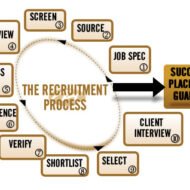
Recruitment Process Recruitment refers to that process carried on by the company to attract suitable candidates possessing the appropriate characteristics to help the organization reach its objectives. According to Byars and Rue, “recruitment involves a pool of people from which qualified candidates for job vacancies can be chosen.” The basic purpose is to develop a group of potentially qualified people. Recruitment Policy: The policies of recruitment are derived from the personnel policies of the organization where the company has to give due importance to government reservations, quotas, policies regarding sons of the soil, personnel policies of other organizations regarding merit, internal sources, social responsibility in absorbing minority sections, women etc. Sources of Recruitment: INTERNAL SOURCES: This include 1. Present permanent employees 2. Present temporary/ casual employees 3. Retrenched or retired employees 4. Dependents of deceased, disabled, retired and present employees. Why internal source is considered to be a better choice? To motivate the present employees To improve the morale aspect “Known devils are better than unknown angels”-The credibility of the present employees are well known and they can be judged easily Loyalty and sense of belongingness is there on the part of current employees The employees become highly committed when they are given a chance as they tend to shoulder more responsibility Employees’ psychological needs, economic needs for promotion and higher income can be satisfied Cost of selection can be minimized Similarly cost of training, induction, orientation, period of adaptability to the organization gets reduced Trade unions are happy Social responsibility towards the employees are discharged Good understanding and co-operation extended by co-workers Stability of employment is assured EXTERNAL SOURCES: 1. Educational and training institutes 2. Private employment agencies/exchanges 3. Public employment exchanges 4. Professional associations 5. Data banks 6. Casual applicants 7. Similar organizations 8. Trade Unions 9. Social media networking sites like Facebook and Linked in offer a huge platform for both recruiters and job seekers to find the best possible match. Why external source is considered to be a better choice? · The suitable candidates with skill set, knowledge and talent are generally available · Latest knowledge, skill, innovations or creative talent can be infused into the organization · Candidates can be selected without any pre- conceived notions or reservations · The cost shelled out for these external sources are minimum since they are placed in minimum pay scale · Expertise, excellence and experience in other organizations can be easily brought into the organization · Human resources mix can be balanced with different background, experience, skill etc. · Existing personnel will also broaden their personality · Quality of human resource will improve in the long run by development of unique culture RECRUITMENT TECHNIQUES: The management has to contact the prospective employees through various means and stimulate them for applying to the post prescribed. A. Promotions: This is a good technique to stimulate internal employees as they will be willing to shoulder more responsibilities if they are assured of promotions B. Transfer: If employees are transferred to the places of their choice, it will stimulate them C. Recommendations of the present employees: Management can contact, persuade the outsiders to apply for job in the organization through the recommendations to the candidates by the present employees, trade unions etc. D. Scouting: This is another way of recruiting where the representatives of a particular organization are sent to various sources of recruitment to motivate the prospective candidates to apply for the jobs. The representatives provide the necessary information about the company and clarify doubts of the candidates. E. Advertising: Though the popular and widely accepted way of recruitment, still it proves to be one-way communication. Newspapers, Magazines of all types, television and internet are the possible sources of advertising channels and internet marketing leads the rest. The technique of advertising should...
Posted by Managementguru in Business Management, Principles of Management, Training & Development
on Mar 7th, 2014 | 0 comments
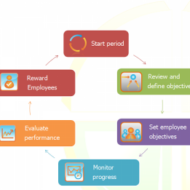
MBO BY PETER DRUCKER Peter Ferdinand Drucker was an influential writer, management consultant, and self-described “social ecologist. Harvard Business Review honored Drucker in the June 2004 with his seventh McKinsey Award for his article, “What Makes an Effective Executive”, the most awarded to one person. The Concept of MBO: Management by objectives was a concept introduced by the doyen of management, Peter Drucker. This concept involves formulation of objectives for the entire organization and which are then broken down into divisional, departmental and finally individual objectives. Objectives are decided on the basis of mutual consultation between managers and employees at the departmental and divisional levels and thus it can be appropriately called an integration of top down and bottom up approaches in management. The specific aim is to make the employees participate in decision making and thus motivate them to perform better. Management by objectives follows a step-by-step procedure that ensures the feasibility of the action plans decided upon. Realistic and achievable plans are set. Activities to be preformed are identified. Logical relationship between the sequences of activities is laid down. Time frame and cost frame are fixed. Resources to be allocated are decided upon. Salient features of the process: Self control and Self direction: The workers exhibit keen self control in that, they self appraise their performance that results in intrinsic motivation. Setting short goals and periodical review to match the current performance with the expected standards greatly boosts the performance of each and every individual and gives him the necessary drive to accomplish the assigned tasks. Periodic progress review: This helps to correct errors and deviations if any. This review is done by managers of higher levels in a constructive way and adequate counseling and guidance can be given to the subordinates to bridge the shortfall if any, in performance. This is possible only when there exists a mutual understanding between the superior and subordinates to find reasons and solve problems together. Reviews need not necessarily pinpoint errors but also revise future plans and actions. The major emphasis of management by objectives lies in its result oriented approach. What is the relationship between management by objectives and motivation? Motivation of an employee can be brought about by financial incentives such as bonus, increments, pay and perks or non-financial incentives such as recognition, appreciation and additional responsibilities. But nothing can equal self-motivation which makes an employee perform with aplomb. As management by objectives is directly linked with goal-setting, performance becomes better and better as the goals are set at a higher level. It involves complete participation from the employees’ end and when specific goals are set by mutual consent of workers and management, the results are magnificent. Many firms practice management by objectives to promote harmony and sense of belonging in the minds of employees as a result of which there is remarkable improvement in performance and productivity. The focus is on improving the job design and work module to make the jobs more meaningful, interesting and...
Posted by Managementguru in Business Management, Organisational behaviour, Principles of Management, Training & Development
on Mar 7th, 2014 | 0 comments
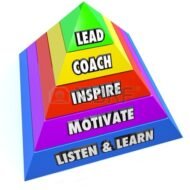
Performance Optimization Through Effective Management An organization is a network of people striving to achieve their targets. So it is a wise thing to synchronize their activities in-order to enhance the harmony and build a strong team as well that protects the network from crumbling by means of mutual trust and behavior. It is imperative for the management to define the structure and hierarchy as well as the techniques that help the organization to efficiently function. Here are some means to make your organization to function efficiently and you’re your team stand apart from the crowd. Training of Subordinates: The better the training of subordinates, the fewer the number of necessary supervisors. Well trained subordinates require not only less of their manager’s time but also less contact with their managers. ‘On the job’ training programmes have found to be more effective in industries which are labor intensive. Coaching and mentoring improve the understanding and efficiency of the workforce and help them to maximize their effort and in turn productivity. Clarity of Delegation of Authority: The most serious symptom of poor organization affecting the span of management is inadequate or unclear authority delegation. If a manager clearly delegates authority to perform a well defined task, a well trained subordinate can get it done with the minimum of manager’s time and attention. But if the subordinate’s task is not clearly defined, either the task will not be performed or it will be a colossal waste of time for the manager to supervise and guide the subordinates’ effort. Clarity of Plans: The character of a subordinates‘ job is defined by the plans to be put into effect. If these plans are well defined, if they are workable, if the authority to undertake them has been delegated, and if the subordinate understands what is expected, little of a supervisor’s time will be required. Such is often the case with a production supervisor, who bears the responsibility of achieving targets within the stipulated time period. If the plans cannot be drawn accurately, subordinates must do much of their own planning where they may lack direction. On the other hand if the superior has setup clear policies to guide decisions and has made sure they are consistent with the operations and goals of the department, work becomes simple and easy for the subordinates to follow. Communication Techniques: If every plan, instruction, order or direction has to be communicated by personal contact and every organization change or staffing problem has to be handled orally, it slows down the managerial activity. The ability to communicate plans and instructions clearly and concisely also tends to increase a manager’s span. At the same time the subordinate’s job is greatly facilitated by superiors who can express themselves well. A manager’s casual easy style may please subordinates, but it reduces the effective span of management and lowers morale as well. Amount of Personal Contact Needed: Many situations cannot be completely handled with written reports, memorandums, policy statements, planning documents and other communication techniques that do not involve personal contact which an executive find it valuable. There are other situations in which the best way of communicating a problem, instructing a subordinate, or “getting a feel” of how people really think is to spend time in personal contact . The high percentage of time spent in meetings and committees might be reduced some what by better training, better policy making and planning, clearer delegation, more thorough staff work, better control system and objectives standard. Studies have revealed that, effective spans were narrower at lower and middle levels of organization but were increased at upper levels and size had little...