Currently Browsing: Entrepreneurship
Posted by Managementguru in How To, Marketing, Social Media, Startups, Strategy
on Dec 16th, 2015 | 0 comments
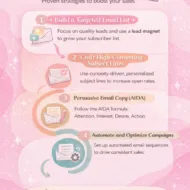
Email marketing remains one of the most powerful ways to generate sales online. In fact, many marketers consider it the highest ROI channel when done correctly. Whether you’re selling digital products, services, or affiliate offers, mastering email selling can significantly boost your revenue. 1. Build a Targeted Email List The foundation of successful email marketing is a high-quality, targeted email list. Instead of focusing on quantity, prioritize relevance. Offer lead magnets (free guides, templates, or checklists) Use landing pages to capture emails Segment your audience based on interests Many Gumroad creators use email capture strategies to grow their audience and drive sales. For example, guides like “Gumroad E-commerce Guide” emphasize using email automation to market products effectively. 2. Write High-Converting Subject Lines Your subject line determines whether your email gets opened or ignored. A compelling subject line should be: Clear and curiosity-driven Personalized when possible Benefit-focused Resources like “Optimizing Email Open Rates” on Gumroad teach how strong subject lines can dramatically improve engagement and open rates. 3. Use Persuasive Email Copy (AIDA Method) To sell effectively, your email content must follow a proven structure. The AIDA formula (Attention, Interest, Desire, Action) works exceptionally well: Attention: Hook the reader instantly Interest: Highlight your unique value Desire: Show benefits and outcomes Action: Include a clear CTA Many successful creators rely on email templates and structured sequences to drive conversions. Courses like “Email Marketing Master Class” provide frameworks and templates for writing persuasive emails. 4. Automate and Optimize Your Campaigns Automation allows you to sell consistently without manual effort. Use: Welcome email sequences Follow-up emails Behavioral triggers Real-world examples show that even small email lists can generate sales when optimized. One case study reported 60% open rates and multiple sales from a single campaign, highlighting the power of email marketing. Final Thoughts Selling through email is not about sending random promotions—it’s about building trust, delivering value, and guiding your audience toward action. When you combine list building, compelling copy, and automation, email becomes a powerful revenue engine for your...

Posted by Managementguru in Business Management, How To, Marketing, Project Management
on Oct 29th, 2015 | 0 comments

Practical Tips for Event Planning Professionals How to make an event outstanding! It is always a treat to watch grand events coming live. Be it a Soccer League, Oscar awards Ceremony or more of its kind. Watching it in person or on TV creates a feeling of awe in our heart, don’t they? Have you ever for a second thought how these grandeur events were coming alive or about the people who make these things happen? Honestly, “NO” would be the answer. Behind all of these and more, event management professionals work untiringly to create the best experience possible for the guests, the celebrities, the sponsors & stakeholders, and the spectators. I stumbled across this very interesting article from ALIVE – aliveeventsagency.com an Australian based event management company. It highlights how often risk assessment is overlooked and not put under high priority quotient. Read on… Playing It Safe: Why Venue Security is a Top Priority for Event Planners Event management requires a set of professionals working together with complete understanding to co-ordinate a particular event in style and splendor. All the people involved in the team have one notion in common –that is to make the event a grand success. The event manager is like the captain of the crew and he should outline all the requirements of the client to his team with clarity. It is always the responsibility of event managers to perform over and above the expectations of the client to create a goodwill that will go a long way. Event Management has Become Inevitable: Event managers have become part and parcel of any industry – parties, entertainment, finance, government, retail, fashion, sports, and music. Did you know the anchors of some live shows that we dote are all products of event managers? It is a high tension environment and the glitz and glamour we witness is purely the result of the hard work they render in the back stage. Team, Team, Team… Though four or five people may form the core team, you need to do so many outsourcing jobs to complete the task. Say, you are a wedding planner, right from photography, video, food and cocktail to floral decoration, music and guests welcoming- so many things come under your forte. Imagine how many people you might need to successfully make that event happen! It is better to establish contacts with a trusted set of individuals who will never let you down even in a crisis situation. That you will find out from your experience. Creativity is the key Event Management is all about surpassing the expectations of all parties involved in the events. There are three ways to accomplish this: Arrangement of the events (design) The events have to be unique Should suit the taste of the client and his interests. Client’s Co-operation is more important All said and done, the clients have to be clear in what they want – budget, ambience, kind of events etc.,( In South Indian weddings, the girl’s side has a major financial stake in arranging the events, but the boy’s side has a better say over the matters. So it is better to know the taste and preference of the boy’ side before deciding on events. ) An event manager can never create what he imagines without the support of his team. At the same time he has to be at his best – negotiations between clients, suppliers and company, flexibility, quick thinking, lots of initiative and exceptional decision...
Posted by Managementguru in Human Resource, Marketing, Project Management, Technology
on Oct 28th, 2015 | 0 comments

Best HR Apps For Your Business Development We all know how stressful a HR manager’s job could be. It is his department’s responsibility under his guidance to handle employee relations, payroll management, hiring and layoffs, rewards and remunerations, change and culture management. He can be compared to a mom who is always there to settle scores between son and father. Though the job is definitely tiring in nature, time has come for HR managers to heave a sigh of relief thanks to innovative HR apps that significantly reduces their workload. Apps for Rescue There are now apps that can completely take care of payroll management, network communication, project management, monitoring workforce leave, recruiting and performance management. Think about it, how much of time will be saved if there is some technology that helps you in tracking the sales force performance metrics (especially in IT companies where there are hundreds of thousands of employees), attendance, payroll, etc., Today’s technological scenario is something to be awed at and not to be taken granted for. Small organizations should push themselves one step higher to leverage the functionality of innovative technology for their business development. Download “55 ALL TIME POPULAR HR QUOTES” … Big Data – The Big Boss Data sits at the centre commanding all other entities to obey the rules laid by it. Even giants like Google can no more rely on their intuitions for decision making but rather go for numbers and information. HR is no exception when it comes to adapting new technology. Why can’t companies dare to use new software services – afterall nothing is lost! When you are in a situation to scale up your operations on one end and manage the tight competition on the other, yet you would not opt for a change! That does not make sense in any plausible manner. Think Fast Act Faster Let me introduce you to some of the interesting and enterprising HR apps (free as well as paid versions) that will give some room for HR managers to go for a long pending vacation with their family! It is better to automate your HR functions and please, please think over and above MS Office. Orange HRM: OrangeHRM offers you flexibility and freedom to select from free and paid versions of OrangeHRM backed with specialized expertise. Their HR modules cover core areas like payroll management, employee data management and many more. There’s the free option and paid enterprise version. And it’s all open source so if you have developers you can customize it to your heart’s content. App from Hay Group: Allows your managers to create job descriptions from a library of roles or generic templates defined by their experts, or you can completely start from scratch. Suggests the skills and behaviours needed for a role and gives feedback on job design so your managers know they’re on track. Expense on Demand: Expense On Demand will reduce the time needed to process expense claims by at least 50%. Claims are approved electronically and arrive in Finance department fully coded, validated and approved ready to be paid. Bamboo HR: BambooHR combines all of your employee information from all of your locations into a single view. You can then access, control, sort, analyze, and take action on the data instantly—from your office, the road or home. Kim Rohrer Head of People Operations / Disqus says “BambooHR frees up more time for me to follow my passion in helping people do their jobs better” Greenhouse: Make recruiting your competitive advantage through this app that optimizes your entire recruiting process. Find better candidates, conduct more focused interviews, and make data-driven hiring decisions. I’m listing a set...
Posted by Managementguru in How To, Startups
on Oct 23rd, 2015 | 0 comments
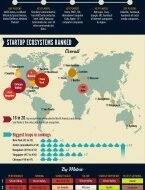
Source: ComputerScienceZone.org I was referred this great infographic on #Startup Evolution by Alex Thompson that categorically explains how the #startup ecosystem has evolved world over and also about the prevailing trends in the most lucrative industry. Happy to note that Bangalore has had a giant leap forward from the 19th to 15th place in the overall ranking. Don’t miss the interesting information presented down under on the rankings of #startups and #silicon valley case study. Enjoy the Infographic… The Startup Genome Project 2.0 The most comprehensive report on #startup structure, ecosystems, and disruptive industry trends has released a second version for 2015. Here are some of the most compelling facts about startups today. Business challenges The Industrial Era: The 20th century saw the first massive shift in corporate structure. Trying to deal with problems such as: Managing an enterprise over vast geographic distances Building and managing multiple customer segments Building brands to engage the newly emerging U.S. Middle Class The Information Era: 21st century businesses are dealing with an inversion of these issues,including: Instant connectivity between customers and business Plummeting cost of entry for new ventures Global competition Re-imagining new and traditional markets as part of a connected world The new business lessons learned by startups are expected to lead the massive restructuring of all traditional corporate structures by the middle of the 21st century. So What Is a Startup? Traditional small businesses have around 75% success rates over their first two years. Startups–even with VC backing–have a 75% chance of failing. What it takes to make them work: 1.)A-Players: Have the vision, execution, risk-taking profile, listening skills, leadership, and fear of failure to create things no one else has before, often with very little direction. 2.)Close proximity: Early stage startups can change course multiple times a day, with core team members working late into the night. Workspaces are often not even separated so everyone can stay on the same quickly changing page. 3.)Feedback loops: With limited money (time) and exposure in their hands, entrepreneurs need access to customer feedback. Mentors often help with strategizing, marketing, financing, taxes, legalities, and pacing. Entrepreneurs with mentors saw 3.5 times more growth and 7 times more investment than those without mentors. 4.)An ecosystem with built in experience: Certain geographic regions have had decades of drastically higher startup concentrations. Simple Turtle – A Place Where Learning is Simple Silicon Valley Case Study: 1950’s-1978: Defense era Key players: NASA Ames, Lockheed Missile & Space Division, United Defense, Hewlett Packard 1979-1986: Integrated Circuits era Key players: Shockley Semiconductor, Fairchild Semiconductor, Intel, AMD, National Semiconductor, over 50 other semiconductor firms. 1987-1996: Personal Computer Era Key players: Xerox, PARC, SRI, Homebrew Computer Club, Apple, 15+ computer companies 1997-2005: Internet Era Key Players: Netscape, Cisco, Google, SRI, hundreds of internet companies in region. 2006-2013: Social Media Era Key players: LinkedIn, Facebook, hundreds of social media companies. Startup Ecosystems Ranked: 1. Silicon Valley 2. New York 3. Los Angeles 4. Boston 5. Tel Aviv 6. London 7. Chicago 8. Seattle 9. Berlin 10. Singapore 11. Paris 12. Sao Paulo 13. Moscow 14. Austin 15. Bangalore 16. Sydney 17. Toronto 18. Vancouver 19. Amsterdam 20. Montreal Biggest leaps in rankings include New York (5-2), Austin (unranked to 14), Bangalore (19-15), Singapore (17-10), Chicago (10-7) By Metric: Performance Top 10 1. Silicon Valley 2. New York City 3. Boston 4. Los Angeles 5. London 6. Tel Aviv 7. Berlin 8. Chicago 9. Sao Paulo 10. Bangelore Though other ecosystems are expanding rapidly, Silicon Valley still currently has as much capital and exit volume as the other top 20 ecosystems combined. Funding top 10 1. Silicon Valley 2. New York City 3. Boston 4....
Posted by Managementguru in Entrepreneurship, How To, Project Management, Startups
on Sep 27th, 2015 | 0 comments
As entrepreneurs, business owners and marketers, we are obsessed with growth. You must be agile and capable of coming up with intelligent, reasonable solutions that will put you ahead of your competitors. Writing business plan for investors 6 questions you must answer. 1. How big is the business opportunity and is it growing? The first question is how big the business opportunity is and is it growing? To answer this, you need to provide information on the size of the market in which you’re competing and trends affecting the market. 2. What are the financial implications of investing in your company? How much money are you asking the investor for? What are you going to do with that money? What are the projected financial results? For example, what do you expect revenues will be in year one, in year three, in year five? What is expected net income in year one, year three and year five? 3. What is your exit strategy? Your exit strategy is critical when writing a business plan for investors, since the exit strategy dictates how the investor will ultimately receive payback for their investment and get their money out. 4. Who’s on your management team? This is key because most investors, or at least the smartest investors, are betting on the management team as much as they’re betting on the market opportunity. You see, even if you have the greatest business idea in the world, if the management team can’t execute on it, then the business will fail. 5. What risk factors have you altready overcome? Every business has risk factors, and the earlier on in your business, the more risk factors. For example, if you currently have an idea for a new product, the risk factors include, Whether or not you will be able to design the product Whether you could cost effectively manufacture the product Whether consumers/businesses want/will buy the product Whether you can cost effectively market the product Whether you could build a quality management team that can execute on the opportunity 6. What are the barriers to entry? Specifically, once you start growing your company, what is there to prevent others, individuals and companies from stealing your customers? Part 2 of this series is coming through…. Here’s another humble attempt to showcase India’s ‘Most preferred Startups to work for’, startups that promise a great deal of work, value and learning to the professionals and freshers out there. 1. Ola – Founded in Jan 2011 by IIT Bombay alumni Bhavish Aggarwal and Ankit Bhati, Ola is not only India’s most popular mobile app for personal transportation, but also one of the most talked about ‘startups’ from India. Ola has also emerged as the top preferred startup to work for in our survey. The Billion Dollar Unicorn has surely caught the imagination of the young employable population. 2. Zoomcar – At No. 2 is another startup that is solving the problem of urban transportation. This self-drive car rental company raised $11 million from Sequoia Capital, Empire Angels and NGP, a week back. 3. FreeCharge – FreeCharge occupies the third position on the leaderboard. Earlier this year, FreeCharge was acquired by Snapdeal in one of the biggest M&A in the Indian internet ecosystem. 4. Freshdesk – It is encouraging to see a B2B startup occupying the fourth position on this list. Freshdesk is steadily appearing to be one of the best product startups built out of India. Perhaps a testimony to this was its latest $50 Million Series E funding from Tiger Global, Google Capital and Accel. 5. Housing – Unscathed by the myriad controversies surrounding it,...