Currently Browsing: Social Media
Posted by Managementguru in How To, Social Media
on May 13th, 2016 | 0 comments

Why and How to Learn Social Media Marketing Watch this VIDEO to gain a fair idea on Social Media and Content Marketing tools available. Social media marketing is interesting only when you happen to enjoy the desired results for your labor on real time. Else it becomes monotonous leaving you frustrated and annoyed. Remember, you cannot do without social media marketing since it has become synonymous with “Success when done Right.” So, you may ask “Why learn social media marketing when I’m already doing it?” The question here is, “Are you doing it right?“ Three Reasons why you should learn the insider tricks of SMM: 1. Popular Social media platforms like Facebook, Twitter, and Pinterest can take your marketing to the next level. 2. To create a Brand Awareness of your Product/Service 3. To communicate with your target audience who will become your brand ambassadors without spending a penny. Before going into the article, let’s take a look at this VIDEO which talks about killer tools to create great social media content – be it images, infographics or video. Here is an interesting read on Backlinks: The Ultimate [Tip-to-Toe] Guide about Backlinks on the Internet written by Mayank Kumar , a resourceful and thorough work. Now, the next question arises, Where do I acquire such insight? Don’t you worry , lot of blogs and online courses are there for your rescue and let us cruise through some of the very genuine resources. Top 10 blogs that teach you SMM from A to Z; 1. Buffer Social https://blog.bufferapp.com/ This blog offers perfect answers to many questions marketers have, supplementing them with authoritative, in-depth articles on cutting-edge topics. Social Media Marketing 2016 – Complete Certificate Course 2. Peg Fitzpatrick’s Blog This blog combines resourceful content on a variety of social media platforms with hands-on-solutions for marketers. Go Viral on 7 Social Media Marketing Platforms 3. Razor Social http://www.razorsocial.com/blog/ Learn all about content marketing, social media auomation, analytics and tools. Well researched and comprehensive content guides you through. A complete guide on social media marketing automation 4. Social Media Examiner Visit this Social Media Jungle I’m always amazed at the way they present their in-depth articles without leaving any area of social media untouched. Their social media reports are supplemented with valuable data social marketers want. One of the to blogs I would say. 10 Free Online Courses In Social Media and Inbound Marketing 5. Shout Me Loud What’s more inspiring is, this blog is run by a pro blogger from Delhi, India namely Harsh Agrawal. What started as a passion is now enriching the lives of more than 432,000+ readers globally and helping them to learn all about Starting & managing a blog, WordPress, Social-media, SEO and Making Money online. SEMrush Competitive Data
for Digital Marketing Professionals 6. Rebekah Radice She talks more about the strategies involved in capturing and promoting your products in various social media platforms with plenty of examples and in a “easy to understand” manner. I always derive inspiration and positive vibes when I visit her blog. Looking for affordable and easy to use email marketing and autoresponder tools? 7. Social Media Explorer This is one huge blog with more than 2000 articles written by subject media experts on all aspects of SMM. Innovative adnetwork that speaks revenue 8. Sprout Social Know all about twitter analytics, instagram hacks, social media management, LinkedIn tips. Follow us on Pinterest to know more about SMM 9. Socially Sorted http://sociallysorted.com.au/blog/ This blog helps helps marketers learn to use all things related to visual content in social media. How to get productive without wasting your time on social media, how to use content strategy, and discover the power of visual...

Posted by Managementguru in How To, How to Blog, Marketing, Social Media
on May 7th, 2016 | 0 comments

Why Content Marketing? Your first question when you read this blog post might be, “Why Content Marketing? Why is everyone talking about having a solid content creation, content marketing, and content strategy plan?” The answer is simple: Content bridges the gap between customers and companies. It is the seamless way to establish your presence in the market as well as in the minds of customers and clients. Content tells the story of your brand, accentuating the pain points of your customers and how your product or service solves them. Nowadays, video content makes it easier to convey your message quickly and effectively. Think about how many of you solely depend on Google Search or YouTube to find answers to your questions. Based on your content preferences, you have countless options to explore your quest. For instance, people go to Pinterest to gather ideas on topics they want to learn more about or plan to shop for. You should know, Pinterest is not only a magnificent search engine but also an unending source of SEO keywords. Similarly, YouTube is a massive search engine that holds and generates a vast amount of content, where you can find answers to almost anything you can imagine. Now that we’ve established the importance of content marketing, let’s dive into some key metrics that will guide you if you are a content marketer or blogger. Here are 25 awesome insights on content marketing for 2024-2025, including some key statistics: Personalization is Key: Personalized content can increase engagement rates by up to 72%. AI Integration: 72% of B2B marketers use generative AI tools to brainstorm new topics and create content. Video Content Dominance: Video content is expected to account for 82% of all internet traffic by 2025. Short-Form Videos: Short-form videos, like Reels, Shorts and TikToks, are gaining popularity for their high engagement rates. Interactive Content: Interactive content, such as quizzes and polls, can boost engagement by 50%. Content Repurposing: Repurposing content across multiple platforms can save time and increase reach. Voice Search Optimization: With the rise of smart speakers, optimizing content for voice search is becoming crucial. User-Generated Content: Encouraging user-generated content can increase trust and authenticity. SEO and Content: 90% of marketers include content in their SEO strategies to improve search rankings. Data-Driven Decisions: Using analytics to guide content strategy can improve effectiveness by 60%. Content Quality Over Quantity: High-quality content is more effective than producing a large volume of low-quality content. Mobile Optimization: Ensuring content is mobile-friendly is essential as mobile traffic continues to grow. Content Distribution: Effective distribution strategies are as important as content creation. Influencer Collaborations: Partnering with influencers can amplify content reach and credibility. Content Themes: Organizing content around specific themes can improve consistency and focus. Sustainability Content: Content focused on sustainability and social responsibility is resonating more with audiences. Email Marketing: Personalized email campaigns can achieve higher open and click-through rates. Content Automation: Automating content scheduling and distribution can save time and resources. Visual Content: Infographics and visual content can increase engagement and shareability. Content Communities: Building communities around content can foster loyalty and engagement. Content Audits: Regularly auditing content can help identify gaps and opportunities for improvement. Storytelling: Effective storytelling can make content more relatable and memorable. Content Diversity: Diversifying content types (blogs, videos, podcasts) can reach different audience segments. Content ROI: Measuring content ROI is crucial for understanding its impact on business goals. Emerging Technologies: Staying updated with emerging technologies like AR and VR can provide new content opportunities. These insights should help you stay ahead in the content marketing game for...
Posted by Managementguru in How to Blog, Social Media
on Apr 12th, 2016 | Comments Off on Why You Should Share Your Blog Post More Than Once
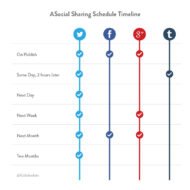
Do you want to know what “Guy Kawasaki” technique for using social media is? It is nothing but repurposing old content and Re-sharing the same content multiple times. Here, let us look into the benefits of re-sharing your blog post multiple times on your social media channels. The first, and perhaps most obvious, reason to share your content more than once is to drive more traffic to your blog which again facilitate the following: Your message will cut across and reach the right target audience You can build your brand image easily Improved Sales If you are pretty serious about your content, then you also need to be serious about driving as much traffic to it as possible. “You need to share content repeatedly because people live in different time zones and have different social media habits.” Think about this: You publish a post on day 1 You share it on all your social media channels and garner likes and shares depending on how viral the content is. If your follower count is going to increase in the coming weeks, don’t you deprive them of all the valuable information you have already posted! Remember you should always re-share relevant content at the right time. So, Is It OK to Share Content More than Once? The reality is that nobody cares. Do you even remember what you had for breakfast yesterday morning? The point is good content needs to be shared multiple times for the benefit of your audience. My site Managementguru is all about business management. And topics related to Human Resource, Stress Management, Social Media Marketing get more likes and shares when reposted on my social media channels. When it comes to content marketing it is nothing but trial and error. Content sharing tips Design a unique content sharing strategy for each social media network separately, like different titles and hashtags. Please don’t spam your social media channels. Ask a question or pull quotes from the post itself Quote a tweet from an influencer along with your link in X– This always works Write an irresistible teaser – which will atleast make the reader come, visit your post! Repeated Sharing Analysis Social Sharing Theory 1 Like anything on social, it boils down to measurement. You have to understand if what you’re doing works. Is repeated sharing helping or hurting your traffic to a specific blog post? Which content should you share more of? Which should you share less of? – Jade Furubayashi Social Sharing Theory 2 What happens when we share a link to that post a second time the next day? Does the traffic double? Based on the law of diminishing returns, no. That’s not quite what happens during the second round. But, if we share the content again a third time, the traffic (for the second and third sets of shares combined) more than doubles. How can you argue with results like that? – Garrett Moon Social Sharing Theory 3 Obviously, pieces that get massive engagement or traffic deserve to be seen more than once, and we double down on those. But the same is true for the opposite; slouches in stats or negative feedback are great indicators that those pieces of content have run their course and should be removed from my content calendar. – Jade Furubayashi How to Optimize Your Content for the Top 5 Social Networks Optimizing your content for the top social networks involves tailoring your approach to fit the unique characteristics and audience preferences of each platform. Here are some tips for each: 1. Facebook Be Conversational: Use a friendly, conversational tone to engage your audience. Visual Content: Incorporate high-quality images and videos to capture attention. Engagement: Encourage...
Posted by Managementguru in How To, Social Media
on Apr 7th, 2016 | 0 comments

Social Media Automation – Do’s & Dont’s Social Media Automation can help small businesses to be in constant touch with the customers. That is the very idea, right! Brands have to establish themselves for which they need to be in the limelight everyday. It might be quite appealing for sometime to rely on automation but automation minus personal touch makes you lose your customers forever. They look for brands that are dynamic, trustworthy and interactive. 10 best social media automation tools by managementguru.net The helpful automation apps becoming reasons for followers to distance themselves from your brand does sound terrible. Here is a list that conveys the sentiments of target audience, highlights the dark side of social media automation and how with simple steps you could solve these problems. Automate in Moderation It is always better to automate in moderation, else you lose the connect with the customer. Schedule four to five updates with different headline variations all at once to post throughout the week. Pic Source: Blog.sharelov Content Distribution Rule Let the content distribution follow the 50-30-20 rule, 50% of others’ content, 30% own content and 20% of non-work related content. Give it a Pause Hit pause on automation to focus on major events you organize. Shape up the Editorial Calendar Don’t ya think it is wiser to automate your non-urgent posts like quotefortheday or Mondaymotivation! Coordinate your regular features and columns with your ongoing editorial calendar. The goal is to make sure that your blog is orchestrated with your marketing, PR initiatives and other corporate communications. Mix Up Your Content for Better Results Mix up your content to avoid monotony– use videos, hashtags, images and boy oh boy, don’t forget to use URL shorteners. This step is used to only apply to posting links on Twitter, but with the addition of analytics (click-through tracking) on many of the URL shortening services, posting a shortened URL on any of your social sites is a smart strategy . Encourage Conversations With Your Audience Assign personnel to quickly respond to queries on social media –‘coz customers’ love when they know they are being heard. Encourage conversations, even “bad” comments can be an opportunity for developing good customer relations. Create an Ideal Posting Frequency Create an ideal posting frequency and find where your followers are online. Your readers should be in line with your blog’s goals. When describing potential readers, it’s a good idea to differentiate them in terms of demographics, psychographics and past behaviors. Also, consider how this segment behaves on social media: are they people who create content, comment on content or just read content. Follow Up Read articles before automating and regularly check when automated messages go live. Make it Personal Add a personal touch to scheduled messages – it creates trust. Give Offers and Discounts Organize tweet-chats, involve audience in conversation, and give lot of freebies and...
Posted by Managementguru in Social Media
on Mar 28th, 2016 | 0 comments
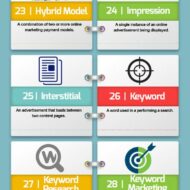
Social Media Glossary For social media newbies, one of the greatest challenges is simply understanding the jargons that this form of media presents them with. New users to a social media site are thrown to an array of unfamiliar phrases or baffled by a volley of bizarre terms. And as each channel emerges, so do new slang, new culture, and redefinitions of space. So, how can a newbie jump in and stay on top? This Quizlet and Infographic are collections of terms, definitions and activities designed for anyone seeking to understand the basic or advanced concepts of social media landscape. Don’t get intimidated by the strange terms out there in the social media wilderness. We are pleased to help you to understand and use those terms that will give you the leading edge. 52 Online Marketing Terms Every Marketer Should Know Social media glossary Socialbrite.org has come out with this great compilation of “The Top 100 words & phrases in the social media dictionary.” Trending Social Media Terms of 2016: Curation: Content curation is the natural activity of aggregating, ranking, and assigning value to content. The original source of content is nearly irrelevant in the purest form of curation, as the focus is acquisition of real-time, high-value content and knowledge. Content curation got its birth from the “wiki” and has gained popularity recently as a result of the recent success of the social site Quora. Unlike traditional organization, content curation (in the new media sense) is reflective of both individual and collective perception and evolution of thought. The user thus relies on the community to engage and help determine what is personally most valued and useful. Thus the cultivation of a reliable network itself is a part of the curation process. Meme: This word was originally used in science to explain virility in thought, regardless of truth. The social media variation of this word leverages the concept of virility in the word’s original definition and instead applies it to content. Therefore, a meme is a popular trend of discussion in social media. A meme can stem from web content, popular culture, or pretty much anywhere. The origin of a meme is as unpredictable as the topic is catchy. Mashup: The term mashup was borrowed from the music industry and was used to describe the mixing of two more songs. Similarly in the social sphere, mashup is slang for web-based applications that combine at least two different existing websites. This potential to merge data and applications from several sources into a single application is often considered to be the beginning of the web service standard or on-demand computing. Social Graph: The social graph is the global mapping of all relationships in the social space. More specifically, each user has a unique map of connections and therefore a unique social graph. Graphs are composed of two types of connections. The first type of connection is two-way — where both users bust accept the association (such as with Facebook). The second type of relationship is one-way, where a user can choose to follow the activities of an individual without that user’s permission (e.g. Twitter, Instagram, etc). Troll: A troll is someone who posts irrelevant, off-topic, and inflammatory content in a social site. A troll’s main objective is to startle others and disrupt normal discussion. Trolls who post to brand social properties often have a primary goal of igniting negative responses from other users, and potentially the brand itself. Courtesy: Breaking the Social Media Code: A Guide to Social Media Jargon ...