Posted by Managementguru in Business Management, Human Resource, Organisational behaviour, Principles of Management
on Mar 20th, 2014 | 0 comments
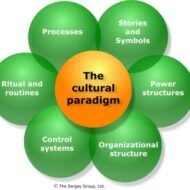
The Ideology of Corporate Culture What is Corporate Culture: the collective beliefs, value systems, and processes that provide a company with its own unique flavor and attitude. Management Attitude: Globalization has necessitated organizations existing in the corporate business world to respond in a unique way in an attempt to enjoy a competitive edge in the market. Corporate culture is a value that keeps an organization intact and helps in building team spirit amongst the members. It is not possible to specifically describe or delineate the concept of culture, yet, people are aware of its fine and striking presence. Let us say that each corporate firm has a dissimilar but unique culture which embraces the values, norms, beliefs and assumptions of the members of the organization and their behavior. It is also greatly induced by the leadership style and management attitude. Role of Culture: Why do organizations need culture as a milieu? Has culture any role in improving the output? Management uses culture as a means to reach out to the employees in an informal manner, to signify what is expected of them plus what is to be expected from the management. Culture cuts through all the levels of an organization and unites the members or employees, to work towards enterprise objectives in a remarkable manner. It is a sort of identity label on the organization and its interest to promote or espouse the value systems through out the organization. Corporate culture encompasses the following qualities enlisted: Quality driven Presence of an informal atmosphere Open communication Customer centric business model Proper and likable dress code Trust and confidence amid employees Value based management CEOs’ as strategic drivers in setting a candid corporate culture CEO’s naturalness and spontaneity with the employees Gratifying employee welfare and security measures Value systems indicated by the vision and mission statements Codified employee behavior Well devised operating strategies Greater autonomy tomanagers at different levels Rewards and recognitions and so on… https://blog.enplug.com/corporate-culture Corporate culture is considered to be a dogma, which many organizations utilize as a means to develop and amalgamate prospective employee groups. An employee learns all about the firm, its activities, the role he is supposed to play, information regarding his superiors, training, career advancements or promotions, pay, employee leave procedures and the long range goals of the organization during the time of induction. The firms should capitalize on this incubation period to spruce up the minds of the employees to act in accordance with the desired values expected by the management. Value Systems: It is inevitable for each and every organization to develop a value system over a period of time based on the founder’s outlook towards business and people working for him. This creates a strong or a weak culture which has an effect on the output or performance of the employees. This also serves as a clear indication whether the organization is proceeding in the right direction. We should never forget that a sound culture eventually aims at achieving the end goals of an organization. The cultural framework of an organization facilitates this process to materialize in a smooth manner. Though intangible in nature, it wields its negative power, when not nurtured appropriately. Flourishing organizations always have pride in their robust cultural back ground, which is a mark of distinction. It definitely shapes up an organization to deliver performance that matches and often surpasses the industry standards. The head of an organization has an important role as a leader as well as a change agent in taking his organization to the next level. The mutual faith and trust between the superior and his subordinates is the anchor point of an organization. Culture – An Intervention Technique: The culture of an...

Posted by Managementguru in Business Management, Human Resource, Organisational behaviour, Principles of Management
on Mar 20th, 2014 | 0 comments
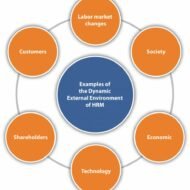
Changing Trends and Challenges in HRM The very conception of Human resource management has changed tremendously in the recent past as it has taken a new form and shape that embraces each and every activity of the organization, as every action requires human intervention. Human resource has become the most important of all the resources from the point, where it was merely one of the many resources. What has caused this great transformation? What has made firms recognise that manpower is the most important of all resources to the extent of including human resource in their accounting as assets! Evolution of HRM: A thorough analysis of the evolution of human resource management clearly indicates the exceptional quality of manpower, especially managers to tackle the very many challenges that come on their way. A manager who was merely a reporter to the top level management has now become indispensable. The laborers whether skilled or unskilled cannot be treated the way they were treated earlier, as the introduction of many labor laws support their cause. The legal framework guides the organization in terms of pay scale, bonus and increments and supports the workers in their welfare, security and safety. Globalization, Privatization and Liberalization: With the initiation of globalization, privatization and liberalization the firms are exposed to more competition and the managers have to put their think tanks to the best use in order to sustain and succeed in the market. People from various background work together in a multinational firm; their language, dress code, food habits, style of working and adaptability are quite different from one another. A human resource manager must go for a “culture” that is unique to the organization. He has to be proactive in order to safeguard the employees from a “culture shock”, by training them sufficiently before induction. Human behavior: Management of human resources by itself is complex and it needs people with special skills. The unpredictable nature of human behavior makes the job more difficult. In the task of managing the emotions and behavior of his employees, a manager must not lose his composure at any point of time for which he has to be a balanced personality. How many of us are gifted with a balanced state of mind and especially in a crisis situation many of us scream our lungs out and blame others for our own faults. Employee Motivation: Motivating the employees to do the job and steer them in the right direction is a Himalayan task for most of the managers. For this they have to adopt a participative style of leadership that will make the employee come closer to them in terms of trust and openness and also it enhances the productivity by improving the efficiency. A relaxed mind is more efficient than one with tight cords. It thinks and acts freely and gives its best. Now a days employees are more educated and informative, so you cannot take them for granted. They are aware of their rights and privileges regarding their jobs and work environment and managers need to handle them very cautiously and intelligently when it comes to satisfying their needs, sentiments and attitude. Handling a large number of employees, allotment of employees to shifts, managing the turnover and keeping the morale high are some of the challenges that the management has to face up to. Achieving the Desired Results: The biggest challenge of any modern manager would be to show results by managing his team. Achieving targets in the specified time is a herculean task; also making people working for the firm realize and understand that unless and until their products and services are of international standards and customer satisfying,...
Posted by Managementguru in Business Management, Decision Making, Entrepreneurship, Human Resource, Organisational behaviour, Principles of Management
on Mar 20th, 2014 | 0 comments
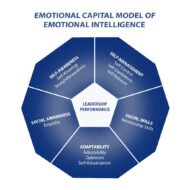
Emotional Intelligence for Effective Inter Personal Relationships What is Emotional Intelligence : an ability or capacity to perceive, assess, and manage the emotions of one’s self, and of others. Role of Emotions: Emotions play a critical role in organizations where there is a need for people to work in groups or teams. A leader who is strong in mind and thoughtful can perceive, observe and direct the emotions of the team members through proper channels. Such a leader is said to be “emotionally intelligent”. No! It is not about intelligence quotient but emotional intelligence. Empathy is the ultimate quality expected in leaders and managers rather than being rated high in the IQ scale.The capacity to perceive, scrutinize and manage one’s own emotions and that of others is one major factor of advantage in the concept of emotional intelligence. An emotionally intelligent person can institutionalize and manage change as well as make powerful decisions. Grooming of Human Mind and Skills: Human resource management throws up a real challenge to corporate organizations, where human minds and skills have to be groomed for the purpose of transcending their performance to remarkable levels in order to satisfy the production requirements. This is possible only when an organization has a leader who can draft and amalgamate the process of relationship management and skill development without a glitch for the benefit of the organization . Transformational leadership with constructive attitude and open approach is well appreciated and accepted by the worker force. What are the distinct features of emotional intelligence? High perception Being insightful Sensitive to the needs and requirements of the employees Self-control Self-awareness Open communication Empathy Change management skills Effective decision making Ever sanguine Instrumental in developing interpersonal skills Breaks the conventional rules Aggressive and daring in his approach Socially popular and easily gain acceptance Motivation driver The rational quotient behind emotional intelligence helps people to think and act smart even during nerve-racking situations.Emotional intelligence helps people to think and act in a logical manner in stressful situations that can divert their energy into positive thinking. A leader with high emotional intelligence can work efficiently with his team members. The spirit of exuberance from the leader acts as a positive signal and takes the pressure off the employees’ mind. It is this ability to identify and understand the emotions of people working under him makes him a comrade rather than a commando. Why EI is Necessary? Emotional intelligence is necessary for top level executives at management level to stand out and succeed. An ordinary employee who does mundane job everyday is expected to be technically sound and well-trained. The same criterion can never be applied to a manager or a chief executive who is bound to manage both formal and informal teams working under the same roof. Only persons who are emotionally sound can uphold the proceedings with dynamism and verve. By motivating human personnel you can get things done in a smooth manner: Give them a fresh start to prove themselves in case if they fail at the first attempt Anger management of self/others Channelize the emotions of self/others and create positive vibes Perceive the problems from various angles to get a complete picture Understanding the root of the problem Treating work as fun Thinking out of the box – parallel thinking and creative thinking must be encouraged amongst the employee group. People with high emotional intelligence are the ones needed in business community as big corporate organizations always find it difficult to manage human resource. The management has to devise a system that takes into account the intricacies of human mind and assigning right people to handle the perplexities....
Posted by Managementguru in Business Management, Human Resource, Organisational behaviour, Principles of Management, Training & Development
on Mar 20th, 2014 | 0 comments
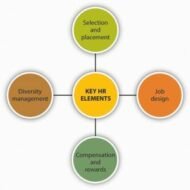
Managing Critical Factors of HR The prerequisite for an organization to excel in all aspects of its business activities is absolute strategic management of its HR functions.Human resource management is an extensive term that covers various aspects of personnel function. This discussion is focused on three main aspects that constitute human resource management. Personnel administration Human resource development Industrial relations Personnel administration: It can be also called as the HR module where policies and programmes are laid down by the HR department for the benefit of the human resource personnel. Employment and compensation are chiefly dealt with in personnel administration. While business firms in the corporate environment are in constant demand of man power, finding the right person for the right job is always a testing task for them. Right from job analysis to HR planning, recruitment, selection, placement, induction and orientation, HR department is held accountable to define and develop these operative functions. Mere acquisition and incorporation of human resource is not adequate, the organizations have to engage themselves in empowering their employees through competent training, motivation and refining their social relations. Job Assessment: Job assessment has to be done for fixing compensation that includes wages and salary administration, incentives, bonus, fringe benefits and social security measures. The shifting business environment and consumer requirements compel the organizations to restructure and re-engineer their organizational functions. These moves can be viewed as strategic responses reflecting from all domains of an organization, namely product, marketing, manufacturing etc., where people are the centre of focus. Human resource development: This is easier said than done. Firms are trying to evolve and employ various methodologies of training to enhance the performance levels to the desired standards. Performance cannot be achieved by coercion or bureaucracy, as the work force is protected by numerous enactment of labor laws enforced by various governments. Training and development is a separate entity by itself and is a continuous process that aims at the development of the organization as a whole and also facilitates employee career planning and development. Industrial relations: The following factors have to be scrutinized by the management to maintain good personal relations with the employees. Motivation Morale Job satisfaction Communication Grievance handling Discipline procedure Quality of work life Employee participation All said and done, the organizational health can be measured by checking the effectiveness of HR management through aspects like HR audit and research that aid the firms to analyze and understand the extent to which they are efficient in utilizing human resource for the benefit of their organization. The experience of a human resource manager comes in handy at situations like these, where he has to don different roles to suit the occasion. Personnel role-advisor for top management, policy maker, counselor to employees, spokesman of the company, change analyst, liaison Welfare role-researcher, catering man, motivator Clerical role-time keeping, wages and salary administration, record maintenance, human engineering Fire fighting legal role-negotiator, trouble shooter, peace maker, problem solver, grievance handling. The management employs scientific, analytical, psychological and social techniques to build the business around human resource, who are the real value additions to the...
Posted by Managementguru in Decision Making, Entrepreneurship, Human Resource, Principles of Management
on Mar 20th, 2014 | 0 comments

An entrepreneur is one person who has the ability to think outside the box, to cash in on the opportunities, to think big and different, to go for innovative ideas, to take unwarranted risks and to make a difference amongst the ordinary lot. Women entrepreneurs are no exception as they have the ability to bring unique perspectives to problem-solving that truly sets them apart as trailblazers in every field they venture into. Modern business world and the society as a whole have understood the importance of women emerging as successful and powerful entrepreneurs which has proven good for the growth of a country’s economy. Challenges of Being a Woman The challenges start at the grass root level: being a woman is sufficient enough to create a gender bias and to be looked down. Physically the differences are obvious and the strength that a man is empowered with cannot be overruled, but the inner strength and the power to conquer that a woman is empowered with can never be equaled. Running a household is even more difficult than running a corporate business. All your management principles come under the household umbrella. No tactics or strategy is left unturned for the smooth running of the household. A woman needs no training in areas of strategic planning decision making (comes naturally) developing interpersonal relationship delegating authority decentralization managing leadership motivating others and self-motivation crisis management impression management quality of work Women CEO’s add Value to their Companies Nature has blessed her with all these and many more managerial qualities that are needed to manage an organization effectively and efficiently. Gone are the days when they were treated a step down, now most of the corporates have very efficient CEOs and their ability is reflected in terms of productivity and profitability. Moreover, a woman adds value to the company as responsibility is her second name and this works out in favor of the organization to gain the trust and confidence of its consumers, suppliers and stake holders. A woman can occupy any post of its highest kind including the presidential or prime ministerial positions. The enthusiasm that a woman entrepreneur exuberates is infectious and induces positive vibes in the organization. Be it negotiations, tackling the union leaders and workers, business travels or bargaining, nothing is a problem. She is more efficient in clinching deals and proves adventurous in concluding new business ventures. Work – Life Balance A woman has to have a balance between her family, relationships, children and work. That is the biggest ever challenge which she handles with ease. The financial pinch that the recent economy has created has served as an eye opener for men in realizing the fact that a house needs two financial paymasters for running the show. Success Ratio of Women Entrepreneurs Few women entrepreneurs emerge out as victors as most of them lack support from their counterparts and lack of financial support from banks, financial institutions may also slacken the pace and hinder their progress. The success ratio has considerably increased when compared to olden days but still many of them lack the nerve to start their own business. Ignorance and lack of self-reliance are the major factors hindering the development of female entrepreneurs. I have seen many women who are born in business families with natural business instinct and their added advantage would be the already available infrastructure, platform and guidance to grow and make it to the top. Even circumstances force certain women to go in for self owned business and once they taste the essence of success they never want to look back. The society has a bigger role to play in developing more women entrepreneurs by giving positive support. Women have a better...