Posted by Managementguru in Business Management, Human Resource, Organisational behaviour, Principles of Management
on Mar 17th, 2014 | 0 comments
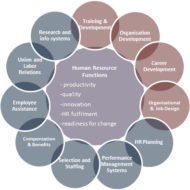
Personnel or Human Resource Management: is the strategic approach to the management of an organization’s most valued assets – the people. Human resource is always in great demand as competent or skilled labor is in short supply. It is important to remember that no one is born with the value of excellence, as the acquisition is gradual in nature and only possible through proper training and one’s own cognitive perception. It is not that people have to belong to the elite group to make their mark in the respective fields. The best leaders and managers often are ordinary people creating amazing results and astounding success. Try some of these golden etiquettes for achieving excellence in the management of human resource: Clear objectives have to be set with the consensus of the employees Recognize the progress Confront problems Manage with flexibility Understand the value of quality Manage time for better results Enhance decision-making skills by delegating authority Master stress Motivate people Think like a winner Pursue a participative style of leadership To achieve the goals of the organization, the HR department will have to reorient itself on the following lines. It is very important that ‘Right people are chosen for the Right job’. During the induction stage, employee attitudes must be shaped in harmony with the culture of the organization. Dynamic training system should be introduced which is supposed to be a continuous process rather than a sporadic exercise. Quality of Work Life: Organization should ensure satisfactory quality of work life in order to minimize the sense of alienation, found in the workplace. It should contribute to an atmosphere to improve self-discipline, self-motivation and self realization for the purpose of production optimization in terms of both quantity and quality. The presence of a fair performance appraisal system will facilitate the growth prospects of employees in terms of career advancement and development. Fair Compensation: Institutions must work out a fair compensation package for all categories of workmen so that they may be able to receive the living wages instead of subsistence-level wages. The accent should be on production and productivity, without any compromise. Opportunities are aplenty, particularly for experienced personnel as the industries offer wide job prospects for the prospective candidates. Now-a-days job hopping is rampant which is a serious issue to be managed. A number of organizations offer bonus in the form of stock that interjects a feeling of oneness, which ensures alignment of interest between employees and the management. Favored position in terms of enhanced performance from the work force is possible only if the management comes down to embrace and lend their ears to certain rational demands form the other end. Security of Employment Increased wages Employee ownership Participation and employment Internal promotions Information sharing Incentives etc., The personnel function can 1) Attract attention to indicate the importance attached to management’s process and the various policies, practices and systems that support the process. 2) Provide necessary information and expertise on best practices in rival companies to benchmark the process and provide with analytical support for diagnosing and recounting solutions to problems arising in the employee management relation. 3) Engage in business decisions and accelerate change that is consistent with the underlying values of the company. Note: The laws and matters relating to wages and bonus come under the purview of the Ministry of Labor and Employment. The Minimum Wages Bill was passed by the Indian Dominion Legislature and came into force on 15th March,...

Posted by Managementguru in Business Management, Human Resource, Leadership, Organisational behaviour, Principles of Management
on Mar 17th, 2014 | 0 comments
Leader vs. Manager – what is the connecting thread? Who is a Leader? A leader is always looked up to, by his followers as they are truly inspired by his personality, behavior and the power of his words and actions. The intellectual ability of a leader is definitely on the higher scale than a non-leader and also the perceptual ability and decision making skills are amazing. The main idea of pondering over leadership is that how the qualities of a leader make him more successful and how those unique qualities can be acquired by a manager of a firm to influence a group towards achievement of goals. What makes a leader unique? Every individual is bestowed with at least one special quality that makes him unique. A leader obviously is inherent with so many good traits and qualities that influence others and the best part of the story is that he understands his own potential and employs the right skills at the right time. It is basically a personal quality of character in a man that influences the behavior of others in a productive manner. Top 10 qualities of an effective leader; A man of charisma-the followers should be attracted by his magnetism and willingly contribute to the cause Should have a clear idea of future plans-Here he differs from the manager who is concerned more about the productivity Should be action-oriented, dare to achieve the impossible Should be tough at heart -stick to his principles and not a victim to circumstances Should be flexible, when it comes to the #welfare of his people Maintain integrity and humility Value-driven to gather trust Open and honest in his endeavors Creative-the ability to think out of the box Should possess sense of humor that makes him an affable person and even serious issues can be dealt with ease Is Manager a Leader too? Is it necessary that a manger has to be a good leader too? Of course yes. By virtue of being selected for the post of the manger, a person cannot manage the show. Unless he possesses the true qualities of a leader he cannot pull the strings tight and lead the organization in the right track. Without the right elements of leadership, he merely becomes a care-taker enjoying his pay and perks. He will not be liked by his subordinates if he doesn’t have that drive to make a mark of himself as an assertive person and in due course of time either he becomes the entertainer of the firm or he loses his integrity, both of which is not good for the organization’s efficiency and productivity. Roles of an efficient manager: A manager has the necessity to prove himself in terms of planning, formulating strategies, successful completion of targets, increased production, increased sales, acquisition of more orders, managing his team without much conflicts and above all make the team to abide by and obey his rules. A manager to be a successful leader need not be aggressive to prove his point but tough and determined to get things done. Big corporate firms frame ‘systems’ which are nothing but templates of action incorporating all the elements needed for execution in a tailor made fashion. A manager has to now focus on the strategic elements of management since the technicality is being taken care of by the systems. What is the right management approach? Managers expect subordinates to nod their heads in approval to whatever they say. This not the right approach; there should always be a reciprocal relationship between both the parties as in the case of a leader and his followers. A give and take policy makes you more...
Posted by Managementguru in Human Resource, Organisational behaviour, Principles of Management
on Mar 17th, 2014 | 0 comments
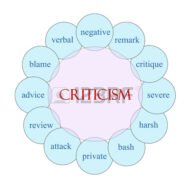
Criticism Makes You Stronger and Sharper “Flattery is telling the other person precisely what he thinks about himself.” –Dale Carnegie “Criticism may not be agreeable, but it is necessary.”-Winston Churchill Critics are always feared for their barbed tongue and piercing comments. If you look at popular figures and celebrities, they tend to give much importance to these comments as they are real tools for self improvement and personal enhancement. Criticism helps improve knowledge, helps all the parties involved and helps one to learn and react to the actions of others. It is also a no-cost source of research that promotes a team spirit as well as a certain broad-mindedness / open mindedness of the human resources of an organization. It is a non-monetary tool of motivation. It helps in achieving organizational goals and objectives, also helps in realizing hidden mistakes, and tackles various bottlenecks. No doubt, it is a mixed blessing! Despite its benefits, it renders the following costs, which are the dark side of the coin: 1. It paves the way to enmity and hostility amongst those who frame policies and those who implement them. 2. It may lead to industrial dispute. It creates an unpleasant, undisciplined atmosphere in an organization. 3. It may result in unhealthy conflicts in an organization, undermining its human resources base. 4. It could also kill the spirit of initiative. 5. A superior may feel hurt or insulted when his subordinates / peers pinpoint his short-comings. Criticism can be made more positive on the following premises: 1. Do not perceive it as something bad or a shortcoming. If you feel it is unworthy of you, turn a deaf ear to it. 2. Give some time for the dust to settle down when someone is rude in his criticism as, with time, its impact will be diluted. 3. If you are criticized unfairly defend yourself and stand by your conviction. 4. Perceive it as a source of potential help in making wise decisions. 5. Do not arm the critic by counter attacking. That blows into a vendetta at times. 6. Do not raise your voice above the voice of critic – let him go ahead and be mild and amicable with him. Criticism is like the proverbial double-edged sword, and so can easily be made more effective as a potential business management tool by selecting leading and conductive spots where critics can come together and draw their views verbally / non-verbally, publicly or anonymously. Perceive critics as a vital source to help solve and implement solutions for the problems raised. Explore the critic’s view fully and freely, providing all sorts of ways in which critics can express their deliberations without...
Posted by Managementguru in Business Management, Marketing, Operations Management, Principles of Management, Strategy
on Mar 16th, 2014 | 0 comments

Game theory and strategy What is Game Theory: Set of concepts designed for decision making in situations of competition and conflict under specified rules. The prisoner’s dilemma: The prisoner’s dilemma is a canonical example of a game, analyzed in game theory that explains why two individuals might not cooperate, even if it appears that it is in their best interest to do so; Albert W. Tucker formalized the game with prison sentence payoffs and gave it the “prisoner’s dilemma” name. To solve many practical problems that are encountered in economic, military or other disciplines, one has to deal with situations in which there are two or more conflicting parties striving for the same objective and the outcome of each action of one party depends solely on the opposite parties choice of a course of action. As we all know only one horse can win the race ultimately and the other parties only can prolong the race or see to that they make every possible move to delay the opponent’s success. So, what’s this game theory all about? This is a special mathematical method that was evolved mainly to analyze conflict situations where the number of competitors is finite, each participant has a definite set of actions to choose and there is a conflict of interest between the competitors. So it helped the participants to reach a decision that would put them in the winning post. This theory has spilled its implications on business situations where success is the motto and conflict and competition the order of the day. Only the best among the best survive. Darwin’s theory, “Survival of the fittest” applies not only to biological organisms but also to business organizations which are also abuzz with activity. Chance Moves: Games like chess, checkers are played according to a definite set of rules laid down and these game patterns has inspired business persons to introduce strategies in business, where the concentration is mainly focused on the chance moves that defeats the opponent. Big business corporates mainly concentrate on the strengths and weaknesses of their competitors to have an edge over them. A real game is controlled and regulated by the statutory rules to be followed but a business game involves lot of killer instincts and intuitions combined with rational thinking and logic. Optimal Strategy: The first party always puts himself in the shoes of the other party and tries to perceive how the other party would react in a particular situation. Although the aim is to win, choosing the optimal strategy is what matters. It will at least keep you in bay. Precise solutions can be arrived at if you plan your game fittingly. The anticipation and thrill that is involved in a strategic game is matchless. We witness a lot of firms imitating what the leader of the market does. The risk is borne solely by the firm introducing the change and the firm takes the major share of profit as it is the pioneer and if it loses the next strategic move is planned for. For a company with sound financial position, the chance move is worth giving a try, head or tail doesn’t matter. The stalkers are benefited by the waiting period during which they come to know of the pros and cons of the strategy employed by the leader. Games are played in the true spirit of sportsmanship, but a business faces cut throat competition. There is no space for any courtesy or liberal approach. If you are quick enough to pick the pulse of the people by gauging their preferences, analyzing the market conditions and employing timely strategies you will at...
Posted by Managementguru in Business Management, Principles of Management, Project Management, Strategy
on Mar 16th, 2014 | 0 comments

Strategy Implementation Organizational objectives must be accomplished by strategic planning and thinking that makes your organization unique and also helps to have a competitive edge. What are the elements that are part of this planning strategy? Proper allocation of resources An appropriate organization structure Efficient human resource personnel An effective management information system A feasible budgeting system A good reward system Periodic strategy review system There are many more aspects that can be attributed to broadly define strategic planning and execution. The success or failure of this exercise is in the hands of managers, who should be adequately prepared for the planning process. The objectives of the organization must be well defined and clear so that the people in the organization can evolve the necessary plans to accomplish those objectives. The action plans are then formulated based on these initially formed plans. So, the planning premises form the base on which the organization is built. Strategic business units must be identified and nurtured to add value to the organization. Why strategic planning becomes a failure in some of the organizations? Lack of proper training in strategic planning, and the key persons are the managers at all levels. Vague goals and objectives don’t make them meaningful and strategic excellence cannot be achieved. Long term goals not subjected to periodic review. If there is fluctuation in the political, economic or social environment, that is detrimental to the industry in which the firm operates, the goals can be reviewed and a revised strategic plan can be devised for the long term health of that organization. Poor budget planning. To enjoy a sustainable competitive advantage in the market, you need to have a good financial backup to give shape to your plans. The strategic plans must be supported by specific action plans. It is a pity that in many organizations, there is neither co-ordination nor co-operation between the peers to make the strategic plans successful. Integrating these various functional groups becomes a tough task for the management. Simple but effective measures: Above all odds, a company can make things work, if the management is wise enough to follow these First and foremost thing to be done is to communicate the strategic plans to all the managers who are key decision makers. The management must make sure that everybody involved in the strategic implementation understand those strategies. Well devised action plans that contribute to the accomplishment of the firm’s objectives must be laid down. A well defined span of management that makes communication flow easy and simple. Revising the strategies in lieu of the contingencies. A conducive organizational climate that is devoid of conflicts and pressure Involvement of top management to ensure success. Thinking Out of the Box: You need “thinking managers“, to make your organization grow. The modern business management lays great emphasis on “getting people together” to accomplish the goals and objectives. How do you get people to work together? They should have a common business ideology that binds them to work for the upliftment of the organization. Although top level management cadre is responsible for formulating strategic plans, organizations must understand that the idea also reaches the lower level management in the right sense. That facilitates smooth execution delivering the expected result. Benefit from this Free Udemy Course on Marketing Strategies https://www.udemy.com/one-minute-marketing-lessons-30-quick-marketing-strategies/...