Currently Browsing: How to Blog
Posted by Managementguru in Cyber Security, How To, Technology
on Apr 16th, 2021 | 0 comments
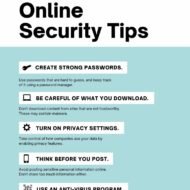
In your private life, protecting your sensitive data should be among your top priorities. The same is even more important when dealing with your company data. Protecting your company data means protecting your clients and employees from identity theft and fraud. It is an essential aspect of your firm’s reputation. Add the fact that most companies deal with a paper trail together with a digital one, and the task of keeping all that information safe becomes even more complex. Sure, you should shred company documents, but that is just the beginning. Here is what you can do to keep your company data safe. Educate your employees Despite the stuff that we have all seen in movies and TV shows, and even in the news, the biggest threat to your security most likely won’t be a foreign group of hackers hiding behind their computer screens. A study by PwC has discovered that internal mistakes and even intentional errors currently pose a more significant threat to your company’s data safety than any external threat. Your business is only as secure as are the devices of your employees. Train them about the threats of doing business and storing information online. A few lessons on cybersecurity can save you from a lot of potential issues down the line. Increase workspace safety Every time someone steps away from their desk while in the middle of a project that includes sensitive business information, this represents a potential data safety risk. You should take the necessary precautions to protect company data from visitors or others who should not see that information. Make sure that all the computers lock up if left alone. After a meeting, make sure no sensitive materials are left behind. After printing, copying, or faxing, make it a rule that everyone should pick up their documents right away. When shredding sensitive papers, do not rely on your internal paper shredder if you have one. Instead, use the services of a professional company. Finally, store sensitive documents in a secure location. Encryption is your friend Using encryption means adding a layer of safety between you and potential hacker attacks regarding digital data. Encrypted data can be accessed only by those who have the password to do so, which means that, even if that info somehow gets stolen or compromised, it would be useless to the thieves without that crucial element. Remember, only the person who has the password can see the data that is protected by the encryption – even if that data is stored in the cloud, without the password that decrypts it, it is entirely safe. It’s important not to limit encryption to your company’s desktop computers. Laptops, tablets, and even USB drives can be protected by encryption. Pay attention to password security We have already mentioned passwords above and how powerful of a tool they can be. It makes sense that such important assets should be well protected. Hackers and online criminals know how important passwords are, too. Sometimes, they use software to crack passwords. Other times, they buy a list of most commonly used passwords and email addresses and try to brute force their way into your company. That is why you should teach your employees how to create strong and unique passwords. Your other option would be to purchase password management software that can create strong passwords and keep them safe. Use proper procedures when disposing of old devices Let’s consider personal data safety once more. You wouldn’t simply toss your credit card statements or bank reports into the trash without shredding them first or setting them on fire. The same holds for all essential paper documents regarding your...

Posted by Managementguru in Cyber Security, Emails and Spam, How To, Intellectual Property Rights
on Mar 25th, 2021 | 0 comments
The world of work has changed considerably over the last 30 or so years. From the relentless pace and inventiveness of technology to the widespread adoption of the internet, email, messaging, and video apps, it’s almost impossible to think of any company these days that doesn’t rely on online services at least to some degree. As the boundaries between the real and virtual worlds continue to blur in both our personal and work lives, so our reliance on online tech continues to increase—and will do so even more in the future. However, while most of us use the internet purely for good reasons, there is an unfortunate dark side to the online world—a world filled with nefarious online criminals who are all too ready and willing to exploit our data. Cybercrime—the greatest risk facing companies today In a recent survey among company owners and bosses, the majority cited the potential for exploitation through cybercrime as their greatest fear and danger facing their firms. Online crime has been growing exponentially for many years and the revenue generated by cybercriminals is expected to tally $6 trillion in 2021 (doubling in value since 2015). Moreover, industry experts suggest the costs associated with online crime will continue to rise by 15% year on year for the next five years—reaching a mindboggling $10.5 trillion by 2025. If you haven’t already, now is the time to act If your firm operates online to any degree, chances are high that you will have already found yourself a target of online crime—whether that be a hacked website or a more troublesome problem such as an SQL injection attack. What is SQL injection, you might ask? In short, an SQL injection is where the hacker identifies and exploits a weakness in your SQL database permission settings to gain access. SQL (structured query language) databases use statements to query data—typically executed from a web page. In an SQL attack, the hacker will execute queries that can add, read, change, or delete data stored in the database. Of course, SQL injections are just one form of attack used by hackers. Other very common types of attack include malware (and ransomware), Man-in-the-middle attacks (MITM), distributed denial-of-service (DDoS) and phishing attacks—to name but a few. Steps you can take to protect your firm If your company is like most these days, you likely rely on your website, email, and network for everything from file storage to staying in touch or allowing collaborative working. Industry experts now suggest data is the most valuable commodity in the world, far outweighing the value of oil or gold. Your data is likely the lifeblood of your firm—most certainly not anything you should be taking chances with. In truth, if you’re looking for the most robust protection against online crime, you should look at handing control of your online services to a professional security contractor. Not only will a dedicated firm take steps to ensure your protection, they will also perform a full audit on your existing network to identify possible threats or loopholes which might provide unwarranted access. A reputable IT security firm will understand the importance of tools like identity and access management, which helps organizations better manage user identities. Solutions like this are important, so quiz any firm you hire to make sure they are up-to-date with the latest industry...
Posted by Managementguru in Instagram Marketing, Marketing, SEO, Social Media
on Aug 21st, 2020 | 0 comments

If you’re losing followers on Instagram, there’s a bright chance that you’re posting content that your ideal reader isn’t interested in. You’re posting inconsistently, or you’re posting too much. If you’ve noticed that you’re losing Instagram followers more than you’re gaining them, your posting schedule could definitely have something to do with it. You’ve probably heard it before and I’m certain you’ll hear it again; Consistency is KEY. How to Grow Your Followers on Instagram? START Define your ideal audience Follow the right people Let your posts add value to the followers Regular posting, 1-2 posts per day will help Start deciding a theme for your Instagram feed and stick on to it. Show your audience that you are authentic by having transparent conversations Decide on your strategy outlining what you want to achieve with your IG account STOP Stop following the wrong people Never post images that are not relevant to your audience Don’t go for random and irregular posting Stop posting photos with different styles that don’t really match Stop pretending to be someone else Stop trying to do all things at once MORE Be clear about who your audience are going to be. The more specific, the better. Spend more time with your kind of audience, one who shares the same interests as yours. Make your posts more insightful by sharing your own transformational experiences. Pay attention to which times are best for posting Be more consistent with your images. Stick to your theme Be more you. Embrace your quirks and habits Be focused on your main goal. Once you achieve it, add a new goal. How to Make the Perfect Instagram Bio? Make your @username your actual name or business name If you are a personal brand or a coach, use your image a s your profile picture so that your audience will develop an immediate trust Use the space where your name should be to let people know what your profession is Focus on the first two lines of your bio and make them count. Get your personality across. This is a chance to really connect with your audience. You can place one link in your bio to drive traffic to, so choose wisely. The Risks of buying organic followers for your Instagram account Low engagement Lack of social credibility Follower drop off Compromised analytics No sales or website traffic Its againgst Instagram’s terms of...
Posted by Managementguru in Business Management, How To, How to make money online, Marketing, Sales, SEO, Strategy
on May 9th, 2020 | 0 comments
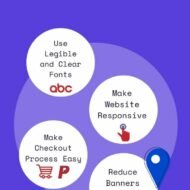
The success of your eCommerce website is usually pegged on whether customers can buy the products they need quickly and efficiently. If there are any hiccups in this process, customers are likely to leave and you will lose a sale. To ensure this does not happen, it pays to improve your customer experience. This has the add-on effect of increasing sales and profits. Below, we will look at a few things you can do to improve your e-commerce website. Use Clear, Legible Fonts Even though most e-commerce websites are not text-heavy, people still need to read descriptions, directions, and texts like on your privacy page. Improvements in this area come from selecting the right font. You want a font that is not too thin or bold, one that is not too fancy, and one that is easy on the eyes if you have a lot of text on your website. Also, ensure that the font is at least 16 pixels in size as this has been showing to be the best baseline font size. Make Your Website Responsive Mobile visitors have overtaken desktop visitors on most websites, and this might be true for your e-commerce website. If your website is not responsive, these users will have a hard time navigating the website. A simple test is to visit your website on your phone and see how easy it is to navigate. If it is not for you, it might also not be for your visitors. There are also lots of online tools that can help you know if your website is responsive and easy for mobile users to navigate. If it is not, use the reports generated by these tools to make the necessary changes. Make the Checkout Process Easy No one wants to jump through hoops when they are trying to buy something from your website. If you want customers to have a good experience when checking out, make the process as simple as possible. Collect just the amount of data you need to complete the sale and no more as people hate filling forms. You should also ask your web developer to make sure any errors that occur as the user fills the checkout forms are displayed immediately and not after a reload. Diversify Your Payment Options Everyone has a preferred way of paying. Some like paying using their credit cards, some their bank accounts, and others using platforms like Stripe and PayPal. To accommodate everyone, try to use as many payment options as possible. Users who might want to pay using a method you do not support will usually leave without making a purchase. If you do not want to add all these options, at least accept credit cards and PayPal. Reduce Banners and Popups Banners and popups are a big inconvenience for a lot of people. This is because they slow customers down when a business is running a flash sale or other promotion and make them feel like they are losing out on the deals they came for. Although these banners can help alert users to promotions and sales you are running, using too many of them can ruin customer experience. Try to use as few of them as possible. Business owners who want to increase sales on their e-commerce websites should start by improving the customer experience on their website. If you make things as simple as possible for customers, they are much more likely to purchase from you and even become repeat...
Posted by Managementguru in Cyber Security, Intellectual Property Rights, Social Media, Technology
on Mar 11th, 2020 | 0 comments

Social media security should be taken seriously if you want your company to thrive, your customers to remain safe online, and your brand representation to remain on top form. Unfortunately, there are people out there that may impersonate your brand or hack your social media accounts. If you want to keep your business safe, read on to find how to do so and what can happen if you don’t. Potential Threats The main threats that can harm your reputation and business are: Fake links which look like your website, but are actually a downloadable malware Impersonation accounts which could sell fake products to potential customers, leaving them unhappy with your brand Impersonating profiles of staff members to gain private and personal data Communication of wrong information which could affect the stock price Hacking of your social media profiles to gain confidential data or post false information The above threats can happen to any business, even small businesses, so you should never believe your business is immune to threats. Instead, you should follow safety advice to ensure your social media is safe from hackers and trolls online. The Cost to Your Business Unfortunately, social media scams such as the ones above can damage a company’s reputation and may lead to financial loss. Any customers who have fallen for this scam will have less trust in the company and will be likely to inform others, meaning many more people are less likely to trust your real profiles and website. You may even deal with negative press over the issue. If you haven’t taken the necessary steps to keep your social media accounts safe, you could be liable for paying back disgruntled customers. Best Social Media Safety Practices There are several simple steps you can take today to implement a safer and more secure way of working with social media, here are a few ideas to get you started: Change passwords regularly, and make them randomised Form a company social media policy that must be signed by each employee Regularly search for your brand name on social media to ensure there are no fake accounts Never list vacation times of management on any social media accounts, whether this be your own personal account of your business account Update your privacy settings regularly, especially if employees have left the company Permanently delete unused accounts Inform your customers if you are aware of any dangers or fake accounts associated with your company If you want to keep your business safe from fake profiles, consider using online brand protection services for businesses. FraudWatch International can protect your company by detecting and removing impersonating profiles from social media, as well as in many other ways. Check out their website for more information on how they can help you to keep your business safe. Being safe online is important for all businesses. Social media is a fantastic, free tool that can drive sales and improve customer retention. Follow the above steps to maintain safety and your company’s...