Currently Browsing: How To
Posted by Managementguru in How To, Marketing, Social Media, Startups, Strategy
on Dec 16th, 2015 | 0 comments
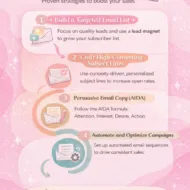
Email marketing remains one of the most powerful ways to generate sales online. In fact, many marketers consider it the highest ROI channel when done correctly. Whether you’re selling digital products, services, or affiliate offers, mastering email selling can significantly boost your revenue. 1. Build a Targeted Email List The foundation of successful email marketing is a high-quality, targeted email list. Instead of focusing on quantity, prioritize relevance. Offer lead magnets (free guides, templates, or checklists) Use landing pages to capture emails Segment your audience based on interests Many Gumroad creators use email capture strategies to grow their audience and drive sales. For example, guides like “Gumroad E-commerce Guide” emphasize using email automation to market products effectively. 2. Write High-Converting Subject Lines Your subject line determines whether your email gets opened or ignored. A compelling subject line should be: Clear and curiosity-driven Personalized when possible Benefit-focused Resources like “Optimizing Email Open Rates” on Gumroad teach how strong subject lines can dramatically improve engagement and open rates. 3. Use Persuasive Email Copy (AIDA Method) To sell effectively, your email content must follow a proven structure. The AIDA formula (Attention, Interest, Desire, Action) works exceptionally well: Attention: Hook the reader instantly Interest: Highlight your unique value Desire: Show benefits and outcomes Action: Include a clear CTA Many successful creators rely on email templates and structured sequences to drive conversions. Courses like “Email Marketing Master Class” provide frameworks and templates for writing persuasive emails. 4. Automate and Optimize Your Campaigns Automation allows you to sell consistently without manual effort. Use: Welcome email sequences Follow-up emails Behavioral triggers Real-world examples show that even small email lists can generate sales when optimized. One case study reported 60% open rates and multiple sales from a single campaign, highlighting the power of email marketing. Final Thoughts Selling through email is not about sending random promotions—it’s about building trust, delivering value, and guiding your audience toward action. When you combine list building, compelling copy, and automation, email becomes a powerful revenue engine for your...

Posted by Managementguru in Business Management, How To, Marketing, Sales
on Dec 2nd, 2015 | 0 comments
Customer Service is the emerging battlefield where small businesses need to score. And if they manage to do well here, then their brands can get automatically differentiated. “Customers may forget what you said but they’ll never forget how you made them feel. “ The existing customers can function as the brand advocates, socially endorsing the business on all channels. Customers today demand to engage with both small and big brands on a 1-to-1 basis. They expect the brands to remember their names and details on second interaction onwards. CRM – The Importance of Customer Relationship Management The depicted infographic here clearly chalks out what needs to be done when it comes to resolving customer issues by delivering a smooth and seamless experience through various channels. Customer Relationship Management is the central point of this infographic developed in tandem with TalkDesk covering the importance of Customer Service across all communication channels, and how to make sure every customer is treated like a VIP. Infographic Courtesy : Kaylee White Ghergich & Co. Social Media and User Experience Social Media has its own role to play when it comes to “USER EXPERIENCE”- Convince and Convert suggests that 42% of customers develop two minds about a brand if they do not get a social reply from it within 1 hour. So it becomes essential for all businesses to have the capability to get back to the customers promptly on social media. Customers want effortless engagement Successful companies recognize that the race from good to great customer experiences is on and that consumers just want effortless engagement. Client service teams must now use data from social media platforms, mobile apps, loyalty programs and a host of other sources to tailor experiences to their customers. The goal is to gain a competitive edge and that means creating an emotional, therefore memorable experience for your customers. Poor client service has an impact on the bottom line and profit margins. Good customer service can be the greatest sales asset a retailer can have, encouraging loyalty and word-of-mouth recommendations. But bad customer service cannot only see a particular sale lost in an instant, but long-term irreparable damage done to the brand. Secure Your Place in the Market Through Great Customer Service Firstly, marketplaces are competitive. There are numerous sellers, sometimes selling fairly similar products. One point of differentiation is price, but another is certainly customer service. There is great cache to being listed as one of the number one sellers on a marketplace. Customers see you first, and you rank highly in searches. One of the ways to reach this status is via customer service, so sellers really go the extra mile to ensure customer service is as good as it possibly can...
Posted by Managementguru in How To, Marketing, Social Media
on Nov 13th, 2015 | Comments Off on Make Instagram Your Brand Ambassador
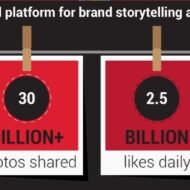
Make Instagram Your Brand Ambassador Watch this VIDEO to quickly double your Instagram followers by spending just 5 minutes per day. Instagram is the new wave in social media marketing niche and is growing by leaps and bounds. Since it is an online mobile photo-sharing, video-sharing social networking service, user access is easy – is that not an added advantage for your business promotion? More than selling, making your brand reach the right target audience is more important. Instagram is one such mobile SNWS which facilitates easy brand promotion with little effort but huge exposure. A Few Excerpts from the Web on How to Use Instagram Effectively for Your Marketing What if we told you that Instagram is currently the world’s fastest-growing social media network and can boast of having 400 million active users? That’s 100 million more than Twitter. Can you afford to ignore such an opportunity? Since Facebook’s acquisition of the channel in 2012, Instagram growth has exploded, with 400 million active users, 30 billion photos shared, and an average of 70 million photos posted per day. With the adoption of a few best practices, Instagram can become a viable and engaging platform for many businesses to help build their brand and reputation and ultimately sell more. And while some businesses, particularly those with visual appeal (including those in the fashion, food, travel and entertainment industries), will find Instagram an instant fit, there remain a number of opportunities available to organizations in any vertical. Remember: Instagram will only drive success if it is operated as part of a cohesive marketing #strategy (nothing works in a vacuum). To this end, you should use Instagram (and any other social media channel) to keep your prospects and clients engaged with your brand. Social media will not replace the need for a well-designed website, a regularly updated blog and a targeted email marketing strategy (this will drive revenue). Put all four of these items together, and you’ll find, with the addition of hard work and planning, success comes more easily. Curated from Instagram for Business — Picture-Perfect Marketing Instagram Gives Amazing Results Through User Engagement People are engaging with Instagram posts on levels unparalleled by any other social network. According to Forrester research, Instagram user interactions with brands is 400% higher than on Facebook and Twitter, delivering 58 times more engagement per follower than Facebook and 120 times more engagement per follower than Twitter. Curated from 5 Killer Instagram Marketing Strategies You Need to Know | SocialTimes Effective Instagram Marketing Strategies 1. Formulate your creative strategy: Ask yourself what your business has to offer people who are on Instagram. Why should they follow you on Instagram, when they are already following you on Facebook and Twitter? The trick here is to give them exclusive access to things that have more to do with your business location and your community than the actual promotions itself. When you’re using Instagram, think of personal engagement and the genuine interest of your audience as opposed to making your posts all about sales and promotions. 2. Use relevant hashtags: Hashtags tend to get mixed reviews from people, primarily because a lot of users haven’t mastered the art of effectively using them. But the beauty of hashtags from a business perspective is that it allows your posts to be visible to people who search for certain hashtags. The rule of thumb is to stick to about 4 to 7 hashtags, and make sure you make use of popular trending hashtags. 3. Share often, but don’t over-saturate your followers’ feeds: The best way to go about this is to create a posting schedule when you think your followers are most...
Posted by Managementguru in Business Management, How To, Marketing, Project Management
on Oct 29th, 2015 | 0 comments

Practical Tips for Event Planning Professionals How to make an event outstanding! It is always a treat to watch grand events coming live. Be it a Soccer League, Oscar awards Ceremony or more of its kind. Watching it in person or on TV creates a feeling of awe in our heart, don’t they? Have you ever for a second thought how these grandeur events were coming alive or about the people who make these things happen? Honestly, “NO” would be the answer. Behind all of these and more, event management professionals work untiringly to create the best experience possible for the guests, the celebrities, the sponsors & stakeholders, and the spectators. I stumbled across this very interesting article from ALIVE – aliveeventsagency.com an Australian based event management company. It highlights how often risk assessment is overlooked and not put under high priority quotient. Read on… Playing It Safe: Why Venue Security is a Top Priority for Event Planners Event management requires a set of professionals working together with complete understanding to co-ordinate a particular event in style and splendor. All the people involved in the team have one notion in common –that is to make the event a grand success. The event manager is like the captain of the crew and he should outline all the requirements of the client to his team with clarity. It is always the responsibility of event managers to perform over and above the expectations of the client to create a goodwill that will go a long way. Event Management has Become Inevitable: Event managers have become part and parcel of any industry – parties, entertainment, finance, government, retail, fashion, sports, and music. Did you know the anchors of some live shows that we dote are all products of event managers? It is a high tension environment and the glitz and glamour we witness is purely the result of the hard work they render in the back stage. Team, Team, Team… Though four or five people may form the core team, you need to do so many outsourcing jobs to complete the task. Say, you are a wedding planner, right from photography, video, food and cocktail to floral decoration, music and guests welcoming- so many things come under your forte. Imagine how many people you might need to successfully make that event happen! It is better to establish contacts with a trusted set of individuals who will never let you down even in a crisis situation. That you will find out from your experience. Creativity is the key Event Management is all about surpassing the expectations of all parties involved in the events. There are three ways to accomplish this: Arrangement of the events (design) The events have to be unique Should suit the taste of the client and his interests. Client’s Co-operation is more important All said and done, the clients have to be clear in what they want – budget, ambience, kind of events etc.,( In South Indian weddings, the girl’s side has a major financial stake in arranging the events, but the boy’s side has a better say over the matters. So it is better to know the taste and preference of the boy’ side before deciding on events. ) An event manager can never create what he imagines without the support of his team. At the same time he has to be at his best – negotiations between clients, suppliers and company, flexibility, quick thinking, lots of initiative and exceptional decision...
Posted by Managementguru in How To, Startups
on Oct 23rd, 2015 | 0 comments
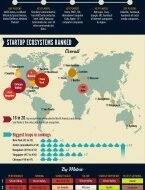
Source: ComputerScienceZone.org I was referred this great infographic on #Startup Evolution by Alex Thompson that categorically explains how the #startup ecosystem has evolved world over and also about the prevailing trends in the most lucrative industry. Happy to note that Bangalore has had a giant leap forward from the 19th to 15th place in the overall ranking. Don’t miss the interesting information presented down under on the rankings of #startups and #silicon valley case study. Enjoy the Infographic… The Startup Genome Project 2.0 The most comprehensive report on #startup structure, ecosystems, and disruptive industry trends has released a second version for 2015. Here are some of the most compelling facts about startups today. Business challenges The Industrial Era: The 20th century saw the first massive shift in corporate structure. Trying to deal with problems such as: Managing an enterprise over vast geographic distances Building and managing multiple customer segments Building brands to engage the newly emerging U.S. Middle Class The Information Era: 21st century businesses are dealing with an inversion of these issues,including: Instant connectivity between customers and business Plummeting cost of entry for new ventures Global competition Re-imagining new and traditional markets as part of a connected world The new business lessons learned by startups are expected to lead the massive restructuring of all traditional corporate structures by the middle of the 21st century. So What Is a Startup? Traditional small businesses have around 75% success rates over their first two years. Startups–even with VC backing–have a 75% chance of failing. What it takes to make them work: 1.)A-Players: Have the vision, execution, risk-taking profile, listening skills, leadership, and fear of failure to create things no one else has before, often with very little direction. 2.)Close proximity: Early stage startups can change course multiple times a day, with core team members working late into the night. Workspaces are often not even separated so everyone can stay on the same quickly changing page. 3.)Feedback loops: With limited money (time) and exposure in their hands, entrepreneurs need access to customer feedback. Mentors often help with strategizing, marketing, financing, taxes, legalities, and pacing. Entrepreneurs with mentors saw 3.5 times more growth and 7 times more investment than those without mentors. 4.)An ecosystem with built in experience: Certain geographic regions have had decades of drastically higher startup concentrations. Simple Turtle – A Place Where Learning is Simple Silicon Valley Case Study: 1950’s-1978: Defense era Key players: NASA Ames, Lockheed Missile & Space Division, United Defense, Hewlett Packard 1979-1986: Integrated Circuits era Key players: Shockley Semiconductor, Fairchild Semiconductor, Intel, AMD, National Semiconductor, over 50 other semiconductor firms. 1987-1996: Personal Computer Era Key players: Xerox, PARC, SRI, Homebrew Computer Club, Apple, 15+ computer companies 1997-2005: Internet Era Key Players: Netscape, Cisco, Google, SRI, hundreds of internet companies in region. 2006-2013: Social Media Era Key players: LinkedIn, Facebook, hundreds of social media companies. Startup Ecosystems Ranked: 1. Silicon Valley 2. New York 3. Los Angeles 4. Boston 5. Tel Aviv 6. London 7. Chicago 8. Seattle 9. Berlin 10. Singapore 11. Paris 12. Sao Paulo 13. Moscow 14. Austin 15. Bangalore 16. Sydney 17. Toronto 18. Vancouver 19. Amsterdam 20. Montreal Biggest leaps in rankings include New York (5-2), Austin (unranked to 14), Bangalore (19-15), Singapore (17-10), Chicago (10-7) By Metric: Performance Top 10 1. Silicon Valley 2. New York City 3. Boston 4. Los Angeles 5. London 6. Tel Aviv 7. Berlin 8. Chicago 9. Sao Paulo 10. Bangelore Though other ecosystems are expanding rapidly, Silicon Valley still currently has as much capital and exit volume as the other top 20 ecosystems combined. Funding top 10 1. Silicon Valley 2. New York City 3. Boston 4....