Currently Browsing: Productivity
Posted by Managementguru in Employee Safety, Human Resource, Labor Management, Productivity
on Jan 14th, 2022 | 0 comments
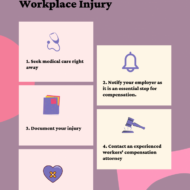
When you’re at work, your mind’s focused on the job at hand. You’re confident that your employer has thought through how to keep you safe and free from harm, which gives you the confidence to focus fully on whatever your role entails. That’s why it’s so shocking when workplace injuries do occur: you simply don’t expect them. If you work in a place with heavy machinery or other dangerous equipment, accidents and injuries can be incredibly severe. Regardless of your injury’s severity, here’s what you ought to do after an injury in the workplace. Medical Check-Up First on your list of priorities is checking yourself for injuries. It might be blatantly obvious that you have cut your arm, but you’ll only know whether that cut will result in nerve damage or other complications if you go to the hospital and speak with medical professionals. Meanwhile, other injuries – like a slip on wet tiles – can leave you with hidden injuries, like concussion or an ankle sprain. In these cases, a doctor is paramount, given that only they can help diagnose and treat all of your injuries. Time Off If your injury is causing any kind of pain or suffering, and you feel that you’re unable to recover while at work, you should immediately inform your employer that you intend to take time off. Struggling back into work before you’re ready can hamper your recovery and may actually be detrimental to the work you do for your firm, too. Given that your injury took place in your place of work, it’s likely that your leave will be paid, and your managers will fully understand why you’re taking some time off to recover. A doctor’s note may be required – but that’s simple to present after your check-up. Compensation Options If your injury was relatively severe, it’s likely that at least one manager in your firm will be wringing their hands, expecting a tribunal or a lawsuit. In these cases, you might be approached with a settlement deal – but that’s not worth accepting right away. You should first speak to experienced injury attorneys like those found at Kampf, Schiavone & Associates. They’ll know if the amount offered is too low – and they’ll advise you on how you may be able to receive a significantly larger sum of cash through their legal assistance. Returning to Work Eventually, with your legal case ongoing or completed and your recovery well underway, you’ll feel like it’s time to head back to work. Depending on the nature of your injuries, you may feel a little concerned about returning to work in the place that caused so much pain and suffering for you. Contact managers and your HR team if this is the case, as they may be able to find you work that’s not directly involved in the area that you sustained your injury. If you experience any discrimination when you return to work, do mention this to your legal team, or mention it to a trusted senior colleague. Recovering from a workplace injury can take time, but you’ll get the compensation you deserve with the right...

Posted by Managementguru in How To, Learning, Productivity, Project Management
on Jan 14th, 2022 | 0 comments

The DIY movement is a powerful thing for a number of reasons, but most importantly, because of the attitude it promotes. Too often in modern society, people will stop learning because they have left school. DIY is built on the foundation that learning to Do It Yourself will help you to become better in every aspect of your life. If that sounds good to you, then this article aims to explain some more about the advantages of DIY. Why DIY is So Useful? DIY, as a concept, is an incredibly useful way to think and approach to solving problems for a number of reasons. There are plenty of issues that you may run into that are generally the domain of professionals in one way or another. However, by learning how to do these things yourself, you provide yourself with a fair few benefits. Home Decor Mood Board Do Things Your Way. One of the main benefits of learning to engage with tasks in a DIY fashion is that you can deal with these problems your way, as and when they arise. No more waiting hours, days, or even weeks for a professional to come and solve your problems; you can deal with them yourself. Save Money. What’s more, by dealing with these problems yourself, you can often save yourself a pretty penny. Professionals are paid well for their services because they deal with issues that are not easy to solve; by learning to deal with these problems yourself, you can save that money and perhaps even put it towards something that you want. What You’ll Need for DIY? So, with the understanding of how useful DIY practices can really be for you or anyone else that wants to engage with them, the question becomes: what do you need to get involved with DIY? There are many answers to this question, but two of the most relevant are addressed below. A Can-Do Attitude and a Willingness to Learn. The most important thing to remember when you get involved with DIY is that there is a reason that most people do not deal with these issues themselves. These are difficult tasks that often require a fair amount of skill to handle. By deciding to deal with these issues personally, you must accept that you will have to learn the same skills that those professionals would have applied, although probably to a lower degree at first. What’s more, the confidence to believe that you can deal with those issues will go a long way in helping you get through. The Right Tools. On top of the necessary knowledge, you are going to need the right tools to get the job done. Fortunately, stores such as Tradefix Direct stock plenty of high-quality tools that will almost definitely help you to get the job done. DIY and Learning The truly beautiful thing about DIY is that it is centered around a willingness and desire to learn about the topics and problems that you are dealing with, which means that the more DIY you do, the more you will learn. They say knowledge is its own reward, and with DIY, you can see more clearly what that means. The more you know, the more you can do and the more confidence you will be in dealing with problems of a similar kind in the future. Knowledge truly is power, and DIY is the tool that releases...
Posted by Managementguru in Change management, Human Resource, Productivity, Technology
on Nov 26th, 2021 | 0 comments

There is no doubt that virtual meetings have taken off in a big way over the previous months and years, but some companies are simply not sold on their main advantages and are looking to go back to the old-fashioned way of doing things at the earliest possible opportunity. Well, the following blog post is all about some of the main benefits of virtual team meetings that may end up playing a big role in your decision-making process when it comes to working out whether a meeting should be held virtually or face to face. Reduced Costs First of all, there is the low-cost factor of a virtual meeting to take into account. Obviously, this can prove to be majorly beneficial as your standard business trip can end up racking up huge bills if you are not careful. On the other hand, many of the main virtual meeting providers are available for free or at an extremely low cost. This makes it a no-brainer for many organizations – especially the smaller ones, which have budgets that cannot stretch as far as the big companies. At the same time, many larger businesses are also deciding to switch to virtual meetings to reduce their costs. Comfort in Own Environment While there is no doubt that it can feel strange when it comes to not being in the same room as the other person, plenty of people have now adapted to virtual meetings and would not go back to the old way of doing things. Ultimately, some people perform better when they can control their own space. As for technical issues, these are something that many people have become used to during the pandemic, so they may well not prove to be as awkward as you would initially think they should be. Allows Time to Focus on Other Things The next major advantage of virtual team meetings is that they are certainly time-saving. A lot of hours can be expended moving from one place to another – not to mention the possibility of getting stuck in traffic and all the other potential issues that can end up occurring along the way. When you are in a virtual meeting, there is no commute time to concern yourself with. Not only this, but you have a lot more hours in the day when it comes to focusing on the other issues that may be pressing to your business and need to be dealt with straight away. Before, a meeting out of town could have taken up your entire afternoon. Now, it can be dealt with within an hour due to virtual meetings. These are just three of the major advantages that can push people to conduct virtual meetings rather than their real-life counterparts. Ultimately, they come down to three simple factors: cost, comfort, and time. Adding all three of them together can certainly make all the difference when it comes to ensuring that you get everything out of the meeting you had initially hoped to, which can prove vital in the road to...
Posted by Managementguru in Business Management, How To, Marketing, Productivity, Sales, Social Media, Startups, Strategy, Technology
on Sep 14th, 2021 | 0 comments
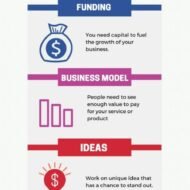
Startups are famous for moving fast and breaking things. This approach, disrupting the incumbent market with new ideas and new products or services, has created some of the world’s largest and most powerful businesses. And it’s something that you should focus on as you’re building your fledgling company, ensuring that you’re constantly adding talent and experience to your team in order to drive your brand further. Here are the key roles and skills to bring on board in 2022 to help your business expand rapidly in a post-pandemic world. Finance One of the key considerations that all startups have is where they’re getting the next big investment. So far, you may have been relying on personal funds or investment funds that you’ve been able to secure through funding rounds. But in the future, you’re going to need to increase your cash reserves in order to maintain a constant cash flow. And that’ll mean bringing in a finance lead to help balance your firm’s books. This can usually just be one individual with experience working in startups who will be able to help you apply for further funding and reach out to investors to secure your next grant of cash. Marketing Getting your products or services seen by millions of people is a constant priority for your firm. You’ll know that effective expansion is all about click to your website and clicks on the magic “Buy” button on your sales pages. And to achieve that, you need savvy marketers. Now, startups are usually composed of no more than a handful of employees, and effective marketing teams are usually ten people strong. So, you’ll want to initially outsource, to experts like SEO Ibérica, to build your early campaigns. Then, once you’ve grown in size and stature, you’ll be able to consider hiring an in-house marketing team to go it alone. Operations An operations manager will help you and your teams work effectively and efficiently. This is often a godsend for startups that they didn’t necessarily know they were missing. There’s a fair amount of chaos in a startup, as a small team juggles a large number of responsibilities. But an experienced operations officer will be able to make all of your lives easier, spotting where there are inefficiencies and other things holding you back from peak productivity. IT And finally, there can be no successful startup without at least one individual on the team who knows their way around digital technology. Whether that’s an app developer who is going to build a new digital arm for your business or a web designer who’s always able to make tweaks to your website in order to bring in more views, you need that tech knowledge in-house and available in the working week to help you build up your firm. Hire experience and ambition in this role – and a certain amount of creativity – so that you’re able to outcompete other brands and their outdated digital infrastructure. Hiring as a startup is difficult, and sometimes it’s preferable to outsource. But as you grow, here are four areas you should consider recruiting within to make your firm successful in...
Posted by Managementguru in How To, Human Resource, Leadership, Productivity, Strategy, Training & Development
on Sep 3rd, 2021 | 0 comments

One of the greatest assets of any commercial organization is to be found in its employees. Regardless of business scale or complexity, this remains a fundamental truth. It can also be observed that, throughout each of the past decades, the commercial sector has had to embrace significant social and cultural issues which have quite literally transformed the workplace. From issues of gender and race equality in the 1950s, to the introduction of new technology through subsequent decades, which impacted and replaced parts of the labor force, the employer/employee relationship has been tested with successive challenges. Similarly, the present business environment finds itself challenged by questions of worker health and safety, and rapidly changing business practices, during a once in a lifetime health pandemic. The question becomes: Are there some universal considerations which can assist management in dealing with human issues as they arise? Listen! A conflict left unattended will escalate There is a simple notion that remains constant throughout the years – we each feel the need to be recognized. The simple fact is that every single person, both employers and employees alike, view the world in a different way. Sometimes, it is that simple acknowledgment which diffuses potential conflict. When a problem arises – Listen. Really listen. It is surprising the number of managers who take pride in their listening skills, yet find themselves with an escalating staffing problem. Referral to a local specialized website provides a telling insight into the scale and depth of the industrial dispute issue. In short, a conflict left unattended will invariably escalate. The first step in conflict resolution is putting aside personal thoughts and feelings on a matter, and focusing on hearing and understanding an individual’s problem or concern. Agree on a solution! A conflict left unresolved will escalate If listening is the first step, then the next step is to seek a solution which will reconcile the matter. Clarify with the worker (or workers in a larger industrial dispute) whether you have understood their concerns and correctly ascertained the extent of the problem. Once the problem is understood by both parties, the next step is find a solution or a course of action which removes the concern for the employee, and is mutually acceptable to the employer. The solution may be a simple and straightforward one in the majority of cases. Ensure that talk is supported by action – words are generally not enough to finalize a matter. Quite often the matter is not simply addressed and may require a longer term ‘fix’ which may necessitate procedural, behavioral or cultural change. In this case, ensure that any commitment is honored – set progress milestones and regular meetings if needed. Mediation by a third party In more complex cases, the involvement of a third party may be warranted. This might be a ‘neutral’ party, perhaps chosen by the employee or a senior level manager. If the conflict cannot be resolved in-house, the employment of an external consultant or legal firm may become the next logical step towards mediation and reconciliation. Summary Regardless of employment position or level, people respond best when they are treated as individuals and feel they are being listened to with interest. Taking some time to remind ourselves of these basic understandings often goes a long way to resolving human issues before they compound and...