Posted by Managementguru in Resume Samples, Video Lecturers
on Apr 19th, 2014 | 0 comments

Creative Resume Writing A creative resume is a powerful tool that allows you to showcase your unique skills, experiences, and personality in a visually appealing and memorable way. By breaking away from the traditional format, you can captivate potential employers and stand out from the competition. To create a creative resume, begin by identifying your key strengths and achievements, then brainstorm creative ways to present them visually. Consider incorporating elements like color, graphics, and typography that align with your personal brand. Additionally, focus on crafting a compelling narrative that highlights your passion and demonstrates your suitability for the desired role. Have a look at the following resume. It sounds very professional and has all the necessary skills outlined and highlighted in a crisp manner. This is how your resume should be. Tips to Write a Creative Resume Think like the employer Understand what the employer wants and customize your information to address those requirements specifically. Choose a basic font Go for a 11 or 12 font size and use Arial or Times New Roman, that will give a professional look and also legible. Write a custom resume for every job When applying for jobs that are a perfect match for your qualifications and experience. No picture please If the company wants to see your face they shall very well visit your LinkedIn Profile. Review resume examples before you start Before you start work on writing or updating your resume, review resume examples that fit a variety of employment situations. Alternatively take a look at this creative resume. The candidate is a model, so featuring her profile with a photo becomes inevitable. Tricks to Impress Your Employer Keep it clean A recruiter or hiring manager may only see your resume for 15 to 30 seconds, so don’t give them a second thought. Create Social Proof When a potential employer googles your name, they must understand what other think of you. Get feedback from employers If the employer agrees to give you feedback, he most probably will accept your request for a visit to the office. Associate with big brands By associating yourself with the right kind of people and brands, you will develop the kind of authority that will stand out to employers. Show off why you are a perfect fit for the role Organize and customize your resume to highlight your transferable skills and experience, so they can tell in 10 seconds that you are qualified. Resume writing need not be a scary thing, because who will better understand yourself other than you? Note: All the names and positions, company names given in the resume are...

Posted by Managementguru in Business Management, Principles of Management, Training & Development
on Mar 2nd, 2014 | 0 comments
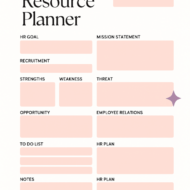
Manpower development today goes beyond simply filling positions – it’s about strategically planning, nurturing, and aligning human resources with the long‑term vision of the organization. It involves accurately determining both present and future workforce needs, while designing the right organizational structure to ensure the right mix of managers, specialists, and employees are in place to drive growth. Key Elements of Modern Manpower Planning 1. Present Workforce Analysis The first step in manpower planning is to assess the current workforce. HR teams collect data on employee demographics, qualifications, skills, training, and experience. Example: A tech company may analyze its developers’ coding skills, certifications, and project experience to identify gaps in AI or cloud expertise. Tools like HR analytics dashboards and talent management systems make this process faster and more accurate. 2. Manpower Inventory Chart A manpower inventory chart provides a clear picture of staffing levels and future talent pipelines. It helps HR leaders: Understand current staffing levels Identify employees ready for promotion Forecast internal talent supply Spot performance gaps for training Plan succession for retiring employees Resolve overdue promotions fairly Example: A retail chain may use this chart to plan for seasonal hiring, ensuring enough staff are available during holiday sales. 3. Job Evaluation and Job Analysis Job evaluation ranks roles within the organization, while job analysis defines the skills and responsibilities required. This ensures clarity and fairness in compensation and career progression. It highlights: Nature of work performed Methods and processes used Skills, education, and training required Interrelation of jobs across departments Work environment conditions Example: In a healthcare organization, job analysis ensures nurses, doctors, and administrative staff have clearly defined roles to avoid overlap and confusion. 4. Job Descriptions A modern job description is more than a list of duties—it’s a branding tool that attracts the right talent. It includes: Job title Core duties and responsibilities Authority and accountability Required qualifications and skills Example: A startup may highlight flexible work culture, innovation opportunities, and growth potential in its job descriptions to attract millennial and Gen Z talent. 5. Short‑Term and Long‑Term Goal Alignment Workforce planning must align with business goals. Short‑term goals may focus on immediate staffing needs for projects. Long‑term goals anticipate future skills required based on market trends and technology shifts. Example: An e‑commerce company may plan short‑term hiring for logistics staff during festive seasons, while long‑term planning focuses on AI engineers for predictive analytics. 6. Demand and Supply of Talent The demand for skilled talent is higher than ever. Organizations must balance internal talent supply with external recruitment. Inter‑departmental transfers may solve short‑term gaps. Long‑term solutions require strategic hiring, reskilling, and succession planning. Example: A manufacturing firm may reskill machine operators in automation technologies instead of hiring externally, ensuring loyalty and cost savings. Why Modern Manpower Planning Matters Ensures future‑ready workforce Builds employee engagement and retention Supports business scalability Aligns HR strategy with organizational...